 hseipaa.kz




Lean manufacturing. Lean production. Kaizen
A seminar on building an optimal production management system and practical tools for improving production processes
 Seminar
 TPM, VSM, SMED, 5S
 Participant certificate
317 500 ₸
/course
250 000 ₸
/course
“Online” — go to online learning: find a course, buy it and start right away

0
About the seminar
The seminar is based on the approach to organising a production system developed by Toyota — Lean Production. Participants apply the methods by which successful enterprises achieve a leading position.

Practical tools for improving established processes

Minimisation of losses and adapting production to the customer

Changing the management culture without large investments
What you will get
 Understanding the concept of lean manufacturing of Toyota plants
The ability to identify 8 types of waste in production
Command of 5S tools and visual management
The skill of building a value stream map (VSM)
Knowledge of TPM, SMED, Poka-yoke, Yamazumi, JIT
Understanding the difficulties of implementation and the experience of successful enterprises
Practical recommendations and answers to questions
Advantages of the programme
The transition to lean production in many cases does not require significant investment

Without costly investments
There is no need to purchase new equipment, change materials or implement expensive ERP systems

Proven methods
Tools that have proven effective at successful industrial enterprises

Business game
In the corporate format, participants build production models and calculate the benefit of applying the tools
What will be required
The seminar is designed for those who manage the production process

Link with production
A programme for managers and technical specialists in production

Preliminary preparation
It is advisable to send information about your processes in advance for review

Readiness for the business game
In the corporate format, the tools are practised on production models

Readiness for change
The key condition is a willingness to change the culture of production management
Who this seminar is for
Production managers
Production technical specialists
Specialists managing the production process
Enterprise managers
Quality service specialists
Production organisation engineers
Lean production specialists
In the seminar programme
From the principles of the Toyota Production System to the tools of the 16949 standard and implementation at an enterprise

8
types of losses

5S
organisation of the workplace

TPM/VSM/SMED
key tools
- Cost reduction as the basic principle of production organisation. The concept of lean production at Toyota plants, history of its emergence, comparison with the Toyota Production System, basic principles, features and paradigms, main elements
- Losses as hidden costs and the 8 types of waste. 5S and 5C — seiri, seiton, seiso, seiketsu, shitsuke — a system for organising the workplace and visualising processes. Visual management for faster perception of information
- Gemba and kaizen, SMED — quick equipment changeover, TPM — total productive maintenance, Poka-yoke — error-proofing, Yamazumi — productivity improvement, spaghetti diagram, JIT system
- VSM as a tool for identifying waste: building value stream maps, analysing maps, moving from the current state to the target state
- A control plan as a quality control tool. FMEA — failure mode and effects analysis, a tool for identifying risks and subsequently reducing costs
- Implementing the lean production concept, difficulties faced by enterprises, the experience of successful enterprises, a business game with benefit calculation, answers to questions and practical recommendations
Course price
250 000 ₸

Learn now, pay later!
30 427
₸/mo
23 958
₸/mo
Installments for 12 months
15%
Enroll in the course or get a free consultation
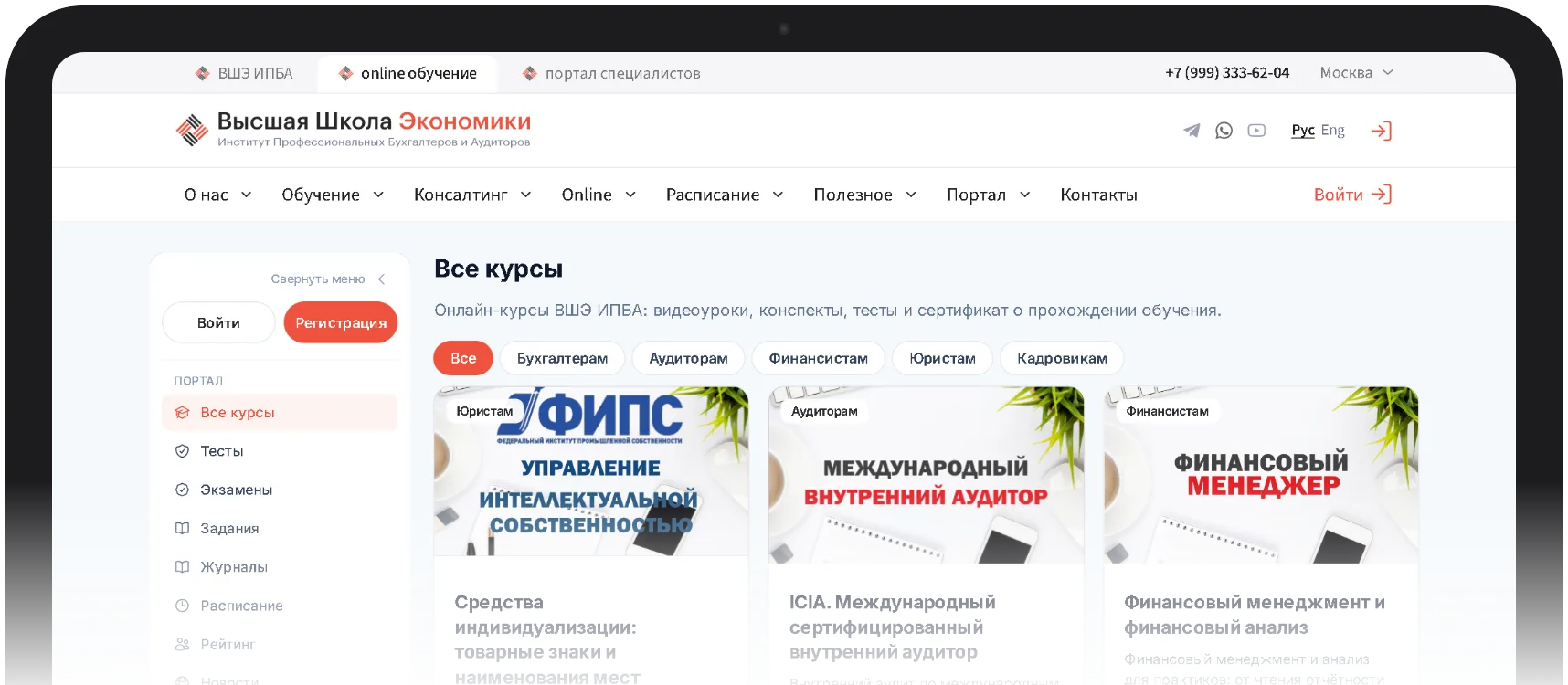
A convenient learning platform
A personal account with a clear interface: manage your training, track your progress and communicate with instructors in one place.
Training materials
All lectures, presentations and assignments in one place
Class schedule
A calendar with reminders of upcoming classes
Progress
Progress and completed assignments
Video lectures
Watch lectures at a convenient time
FAQ
Frequently asked questions?
Didn't find an answer? Ask a question — a manager will reply and help you choose a program.
Ask a question01 When is the training held?
Training is held once groups are formed, and the training time is agreed with the course participants. You can always study online at any convenient time on our portal on.hseipaa.kz.
02 What is the cost of training?
The tuition fee is fixed and available in the schedule, but may be changed for corporate groups and regions.
03 Who conducts the training?
Training is delivered by certified specialists with extensive practical and theoretical experience, as well as academic degrees and titles.
04 Where is the training held ?
Training is held in our classrooms, on site at the client, online via the on.hseipaa.kz platform.
05 How long is the course?
Training is held in our classrooms, on site at the client, online via the on.hseipaa.kz platform.
06 How long is the course?
Depending on the training programme, we recommend reviewing the Training section on our website. With online training you can always see the exact duration of the course down to the minute.
Course price
250 000 ₸
Learn now, pay later!
30 427
₸/mo
23 958
₸/mo
Installments for 12 months
15%
Enroll in the course or get a free consultation
About the “Lean manufacturing. Lean production. Kaizen” program
During the seminar, participants will learn the principles of building an optimal production management system and will gain practical tools for improving existing production processes.
Participants will be able to apply proven methods that successful industrial enterprises use to achieve their leading position and a level of product quality and overall production process that competitors cannot match.
Seminar programme
- Cost reduction - the basic principle of production organisation
- The "lean production" concept of Toyota plants.
- History of origin. Toyota Production System (comparison). Basic principles. Features and paradigms.
- Key elements
- Waste (hidden costs)
- 5S – a system for organising the workspace and visualising processes to ensure control and to identify waste
- Visual management – a tool that ensures the availability and speed of perception of information for timely decision-making
- Standardisation – the basis of process stability and quality assurance
- Continuous improvement system – involving employees in cost reduction while raising their motivation
- Just-in-time (flow, kanban, heijunka) – faster order fulfilment and calculated reduction of inventories
- Other elements: andon, work groups, safety management (risk assessment, ergonomics, ecology), change management, quality, key indicators
- Lean production tools
- Order in the workplace
- Searching for waste
- Problem solving
- Visual management
- Building a flow map
- Quick equipment changeover SMED.
- Lean production methods. Efficiency-improvement tools and subsystems
- Gemba, kaizen
- Value Stream Mapping
- The 8 types of waste
- 5S - seiri, seiton, seiso, seiketsu, shitsuke
- SMED (Single Minute Exchange of Die) – quick equipment changeover. The SMED system
- TPM (Total Productive Maintenance) – total care of equipment. Improving equipment effectiveness
- Poka-yoke – error-proofing
- Yamazumi – improving productivity
- Spaghetti diagram – a tool for identifying waste
- VSM (Value Stream Mapping) – a value stream map: a tool for identifying waste
- The JIT system (Just-In-Time — exactly on time).
- Tools (technical methods) of the ISO/TS 16949 standard
- Control plan – a quality control tool
- FMEA (Failure Mode Effects Analysis) – analysis of failure mode effects – a tool for determining risks and subsequently reducing costs
- Value stream mapping (VSM)
- Building value stream maps
- Analysing and using maps as a tool for eliminating waste
- Bottleneck analysis
- Analysis of value-adding and non-value-adding operations
- Tools for eliminating waste
- Identifying root causes of problems
- Future-state maps
- Development roadmaps based on future-state maps
- Results of applying the "lean production" concept at an enterprise
- Difficulties that enterprises face when implementing "lean production"
- The experience of successful enterprises.
Outcome of attending the seminar
The seminar is based on the approach to organising a production system, TPM, developed by Toyota in the second half of the last century and better known as Lean Production. The seminar covers tools such as total productive maintenance (TPM); value stream mapping (VSM); quick equipment changeover (SMED); rational workplace organisation (5S); kaizen activities and many others.
The "Lean Production" system makes it possible to adapt production to customers' needs as closely as possible by minimising waste. In many cases the transition to lean production does not require major investment. There is no need to purchase new expensive equipment, switch to new materials and technologies, computerise production or implement costly ERP systems, etc. All that is needed is to change the culture of production management, the system of relationships between different levels and divisions of the enterprise, the value orientation of employees and their relationships.
Who the seminar is for
Production managers, technical specialists involved in managing the production process, and heads of enterprises.
Method of delivery
In corporate format: a business game on "Lean Production" – will let you apply a number of the system's tools in practice and calculate the benefit from using them. Participants will build several production models, applying "Lean Production" approaches to create more efficient processes
Answers to questions. Practical recommendations.
! Advance preparation: it is advisable to send in advance the most pressing and burning questions among those that will be covered at the seminar. This will save time and make the seminar more practical.
! The event can be held in corporate or individual format, or as a webinar.
Classes are held in an intensive interaction mode between the trainer and the participants. Work in small groups, brainstorming and visual materials are used. Situations are simulated in which participants experience the same factors they encounter, or may encounter, at work. During the follow-up discussion participants not only observe, analyse, draw conclusions and receive the necessary theoretical information explaining their direct practical experience, but also, with the help of the facilitator, relate their existing and newly acquired experience and knowledge to one another.
Handouts
Provided
Document issued at the end of the seminar
A certificate. An option to obtain a professional development certificate (additional conditions).
Seminar lecturers
The training is delivered by lecturers with extensive experience in the subject. The exact facilitator is determined closer to the date of the event. Confirmed on request.
Not sure which program to choose?
Our specialists will help you choose a program for your goals and answer all your questions. The consultation is free!
Reach us in one click: call us.
+7 (727) 224-21-21
contact us via messengers


