 hseipaa.kz




Professional development course for lawyers
A two-day intensive on key issues of the legal regulation of business activity: procedure, contracts, corporate and labour law
 2 days
 7 thematic blocks
 Participant certificate
165 100 ₸
/course
130 000 ₸
/course
“Online” — go to online learning: find a course, buy it and start right away

0
About the course
The programme is designed for a concentrated presentation of the main legal issues and current problems of the legal regulation of business activity. Learners comprehensively raise their level of professional knowledge in a short time.

Contract and obligations law taking changes into account

Corporate law: JSC and LLP

Inspections by state bodies and labour law
What you will get
 Comprehensive improvement of the level of professional knowledge
Answers to the most pressing questions of practice
The handout is included in the seminar fee
Bonus: 3 months of free consultations by e-mail or telephone
Practical recommendations on conducting court proceedings
Analysis of current case law
Certificate upon completion of the course
Advantages of the programme
A unique format: maximum practice in two days

Concentrated presentation
The main legal issues of business activity are set out concisely and systematically

Post-course support
3 months of free consultations by e-mail or telephone

Only current norms
All blocks are delivered taking into account the latest changes in the legislation of the RK
What will be required
The course is designed for practising lawyers and managers

Basic legal knowledge
Understanding the civil legislation of the RK

2 days of attendance
The programme is designed for two full days

Practical interest
Questions from your own practice are welcome

Readiness for the intensive
A large volume of material in a short time
Who this course is for
Company lawyers
Company heads
Business owners
Corporate lawyers of JSCs and LLPs
Contract management specialists
Court dispute specialists
Everyone interested in law
Programme content
Two days: procedural and contract law, then corporate, administrative and labour law

2
days of training

3 months
free consultations

7
thematic blocks
- Adoption of the Administrative Procedure and Process Code (APPC) of the RK and its consequences for civil proceedings, jurisdiction and subject-matter competence, filing a claim, notifying the parties, interim measures, court costs, representation, recusals, settlement agreement, appeal and cassation, review on newly discovered circumstances
- Pre-trial settlement of a debt recovery dispute, notary's executive endorsement, legal regulation of mediation in the RK, principles and stages, requirements for a mediator, arbitration and arbitration rules, court mediation, participatory procedure
- Commentary on the Law of the RK "On Enforcement Proceedings and the Status of Bailiffs": levying execution on the debtor's property, appealing the actions of bailiffs, grounds for terminating proceedings; practical recommendations for conducting cases
- Freedom of contract, general rules on transactions, invalidity of transactions, verification of authority, conclusion and termination of contracts, securing of obligations, substitution of parties in an obligation, performance, liability and sanctions, banking and intermediary transactions
- Organisation of the management system and competence of governing bodies, formation and increase of share capital, challenging decisions of governing bodies, derivative claims, liability of directors, JSCs and LLPs: charter, corporate documentation, rights of participants, dividends, withdrawal from and buyout of shares
- Procedure and frequency of inspections, Entrepreneurial Code of the RK, inspection results and appeals, administrative liability and the Code of Administrative Offences of the RK; employment contract, remuneration, labour discipline and penalties, financial liability of the parties
Course price
130 000 ₸

Learn now, pay later!
15 822
₸/mo
12 458
₸/mo
Installments for 12 months
15%
Enroll in the course or get a free consultation
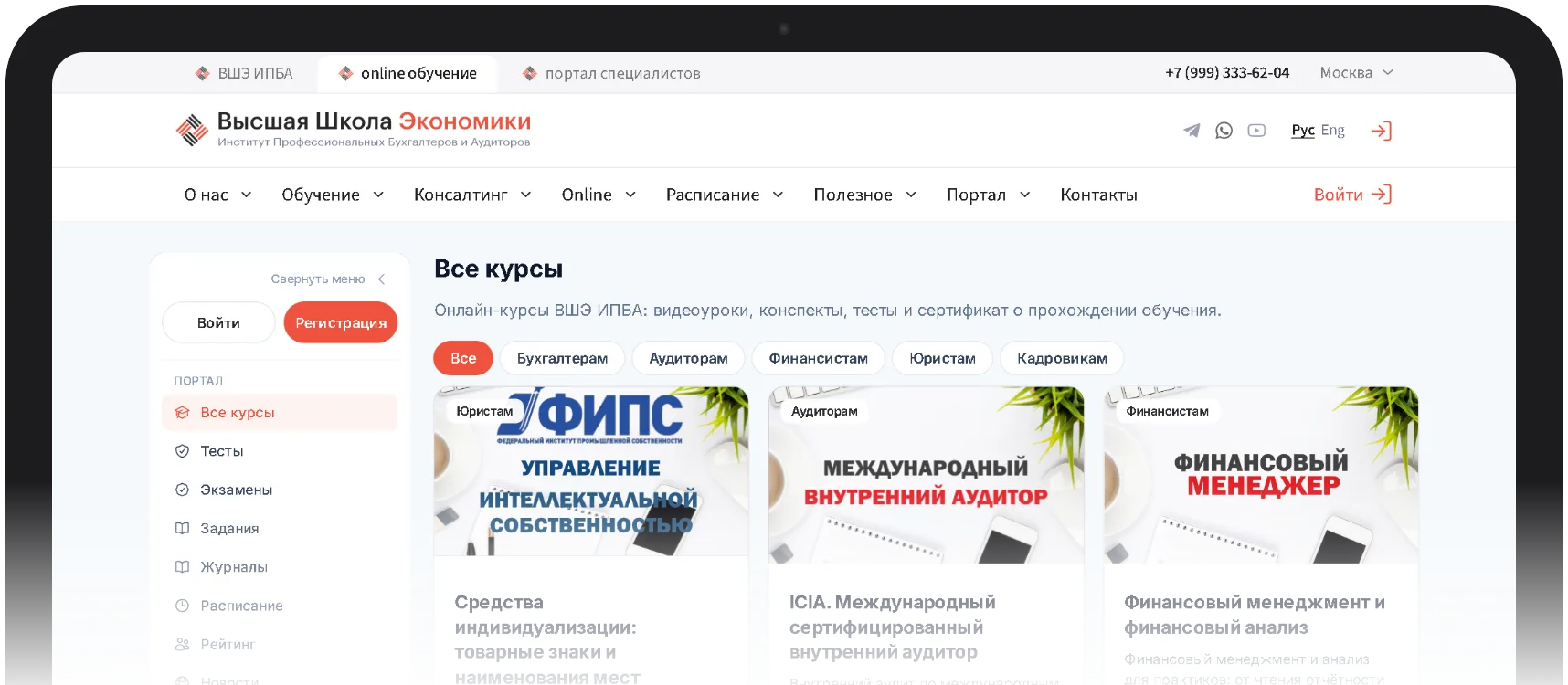
A convenient learning platform
A personal account with a clear interface: manage your training, track your progress and communicate with instructors in one place.
Training materials
All lectures, presentations and assignments in one place
Class schedule
A calendar with reminders of upcoming classes
Progress
Progress and completed assignments
Video lectures
Watch lectures at a convenient time
FAQ
Frequently asked questions about the course "Advanced Training Course for Lawyers"
Didn't find an answer? Ask a question — a manager will reply and help you choose a program.
Ask a question01 Who is the "Advanced Training Course for Lawyers" suitable for?
The course is suitable for specialists who need to systematise their knowledge of “Professional Development Course for Lawyers”, improve their qualifications and apply new skills in their work.
02 What does the course programme include?
The programme covers the key requirements, professional tools and practical aspects of the course topic, a two-day intensive on the key issues of the legal regulation of business activity: procedure, contracts, corporate and labour law.
03 Are practical classes included?
Yes. Theory is reinforced with practical assignments, examples and professional situations so that learners can apply their knowledge at work.
04 What are the duration and format of the training?
Training format: 2 days. Duration: 7 thematic blocks.
05 What document is issued after the training?
After successful completion of the course, a Certificate of Participation is issued. The terms of the final assessment are communicated before classes begin.
Course price
130 000 ₸
Learn now, pay later!
15 822
₸/mo
12 458
₸/mo
Installments for 12 months
15%
Enroll in the course or get a free consultation
About the “Professional development course for lawyers” program
Target audience:
Company lawyers, company executives, business owners and persons interested in law
Purpose of the seminar:
The programme of this seminar has been compiled to present in concentrated form the main legal issues and current problems arising in the legal regulation of business activity. Participants who complete this unique seminar will be able to significantly and comprehensively raise their level of professional knowledge in a short time and get answers to the most pressing questions.
The seminar fee includes handout materials.
Each participant receives a certificate upon completion.
Bonus: 3 months of free consultations by email or telephone.
Programme content
Day 1
- Procedural law
1.1 Civil procedure law, taking account of amendments.
Adoption of the Administrative Procedure and Process Code of the RK and the consequences of its adoption for civil proceedings.
Jurisdiction and competence, filing a claim, notifying the parties, interim measures, court costs, drawing up representation, challenges, settlement agreement, trial in the court of first instance and review of decisions on appeal, cassation, and on newly discovered circumstances, etc.
Pre-trial settlement of a debt-collection dispute
Notary's writ of execution.
Mediation. Legal regulation of mediation in the RK. Areas of application of mediation. Principles and stages of mediation. Requirements for a mediator. The role and functions of the mediator in the mediation procedure. The parties' approach to a mediator. Choosing a mediator. Criteria for whether a dispute can be considered through mediation. Determining whether the parties' dispute can be settled through mediation. Rules for conducting the mediation procedure. Concluding an agreement on settling a dispute through mediation.
Court settlement of a debt-collection dispute
Summary (order) proceedings. FEATURES: CATEGORY OF CASES, AMOUNT OF STATE DUTY, TIME LIMIT FOR CONSIDERATION, OUTCOME OF SUMMARY PROCEEDINGS: ISSUE OF A COURT ORDER (CANCELLATION OF THE COURT ORDER) OR REFUSAL TO ISSUE A COURT ORDER, LEGAL FORCE OF THE COURT ORDER.
Simplified written proceedings. FEATURES: CATEGORY OF CASES, AMOUNT OF STATE DUTY, TIME LIMIT FOR CONSIDERATION, OUTCOME OF SIMPLIFIED WRITTEN PROCEEDINGS: ISSUE OF A DECISION (SETTING ASIDE THE DECISION, APPEALING THE DECISION) OR CONSIDERATION OF THE CASE UNDER THE RULES OF ORDINARY CLAIM PROCEEDINGS, LEGAL FORCE OF THE DECISION
Ordinary claim proceedings, trial in the court of first instance. Determining the subject matter and scope of the claims, assessing the risks of counterclaims, determining whether it is advisable to initiate court proceedings;
- Response to the claim: content, drafting and submission;
- Filing a counterclaim and the conditions for its acceptance by the court;
- Interim measures to secure a claim, recommended steps before filing a motion for interim measures, appealing a ruling refusing interim measures;
- Procedural consequences of changing the grounds or subject matter of a claim, withdrawal of a claim, admission of a claim and settlement agreement; Persons participating in the case and the scope of their procedural rights, parties asserting and not asserting independent claims;
«Alternative forms of resolving civil and commercial (economic) disputes. Mediation in court»
Arbitration: arbitration rules, concept, essence. Judicial mediation. Settlement agreement. Participatory procedure.
1.2. Legislation of the RK on enforcement proceedings
Commentary on the most pressing issues in applying the Law of the RK «On Enforcement Proceedings and the Status of Bailiffs» (procedure for levying execution on particular types of the debtor's property, appealing the actions and acts of bailiffs, grounds for terminating enforcement proceedings, etc.).
1.3. Conducting court disputes
Practical recommendations on preparing and conducting proceedings in arbitration courts, arbitral tribunals and international commercial arbitrations (effective pre-trial work and gathering information on the potential defendant, building the tactics and strategy of the case for the claimant and defendant, preparing a checklist, features of gathering evidence and determining the burden of proof).
- Private law
2.1. Contract and obligation law of the RK, taking account of amendments.
- Freedom of contract (mandatory and dispositive norms, unnamed contracts);
- General rules on transactions (setting a time period in a transaction, problematic issues of the doctrine of conditional transactions, legally significant communications);
- Invalidity of transactions (contradiction of law, transactions to the detriment of the interests of society, fraud, entering into a transaction without consent, exceeding authority by a director or representative, and other limits on challenging transactions);
- Issues of drawing up and verifying authority to conclude a contract;
- Concluding a contract (pre-contractual liability, the legal nature of representations about circumstances, drafting and signing procedure, the moment a contract is concluded, concluding a contract by fax and by other technical means, initialling and stitching, essential terms of a contract and the consequences of failing to agree them, framework contracts, preliminary and option contracts, on-demand contracts and subscription contracts, etc.);
- Securing obligations (suretyship, bank guarantee, pledge, retention, deposit, escrow, security deposit, etc.);
- Termination of obligations (analysis of current issues of judicial practice on novation, settlement in lieu of performance, set-off, forgiveness of debt, termination of obligations by impossibility of performance, etc.);
- Change of parties to an obligation (contractual prohibition of assignment and the consequences of breaching it, distinguishing assignment as a disposition from the contract from which the obligation to assign arises, assignment of future rights, assignment of part of a debt, etc.);
- Performance of obligations (the principle of good faith in performance, documenting performance and the risks of incorrectly drawing up primary documents, performance to a third party, time of performance, place and moment of performance, currency clauses, etc.);
- Termination of contracts (procedure for unilateral withdrawal and termination by a court, materiality of breach as a ground for termination, termination upon a material change of circumstances, refund of prepayment and other consequences of termination, etc.);
- Liability and other sanctions for breach of contracts (problems and mechanisms of proving losses, penalties and the problem of reducing a penalty, annual interest and interest on commercial credit, specific performance of an obligation, suspension of reciprocal performance, etc.);
- Features of concluding transactions with real estate (current issues of state registration of rights to real estate and transactions with it, prospects of abandoning the system of registering transactions, the problem of the reliability of the register and the significance of a register entry, prospects of introducing notarial certification of real estate transactions, challenging the actions of the registration authority, etc.);
- Sale and purchase contract (current issues of concluding, performing and terminating supply contracts, real estate sale and purchase, sale and purchase of shares and participation interests in an LLP, sale and purchase of a future thing and investment contracts, etc.);
- Real estate lease contract (drafting, lease of part of a property and of future real estate, consequences of failing to register a long-term lease, prospects of abolishing the principle of pursuit and the right of first refusal to conclude a lease, setting terms and extending the contract, permissible frequency of rent changes, consequences of breach, amendment and termination of the contract, etc.);
- Construction works contract (setting time limits and other essential terms, procedure for delivery and acceptance, consequences of breach, unilateral withdrawal, relationship with the shared-participation construction contract, etc.);
- Service contract (difference from a works contract, essential terms, the possibility of including achievement of a result in the subject of a service contract, unilateral withdrawal from the contract and the possibility of agreeing a fee for withdrawal, etc.);
- Loan contract (procedure for entry into force, legal nature of a credit line agreement, limits of freedom of contract regarding bank fees, accrual of interest and application of penalties, the difference between withdrawal from a contract and early demand for repayment of a debt, etc.);
- Intermediary transactions (agency, commission and agency-agent contracts in judicial practice, the problem of contracts of de facto intermediation, etc.).
Day 2
2.2. Corporate law, taking account of amendments.
Legal aspects of organising the management system and determining the competence of management bodies. Formation and increase of the charter capital. Challenging decisions of management bodies, derivative claims and other corporate disputes. Criteria for directors' liability.
General characteristics of a JSC and an LLP.
- JSC: Charter. Mandatory corporate documentation. Rights and obligations of shareholders. Payment of dividends. Reorganisation of a JSC. Liquidation of a JSC.
- LLP: Charter. Mandatory corporate documentation. Rights and obligations of an LLP participant. Withdrawal from an LLP, buyback of interests in the charter capital by the company itself. Exclusion of an LLP participant. Distribution of profit in an LLP. Reorganisation of an LLP. Liquidation of an LLP.
Charter capital of a JSC and an LLP
- Shares. Increase and decrease of the charter capital of a JSC. Share split and consolidation.
- Share issue procedure. Payment of the charter capital of a JSC.
- Features of exercising pre-emptive rights to acquire additional shares placed by subscription and other issues of protecting shareholders' rights when the charter capital is increased. Buyback and acquisition of shares.
- Payment of the charter capital of an LLP. Consequences of non-payment of the charter capital of an LLC. Increase and decrease of the charter capital of an LLP. Contribution to the property of an LLP.
- Net assets in a JSC and an LLP.
Corporate governance in a JSC and an LLC
- General meeting of shareholders (GMS). Procedure for convening and holding a GMS. Voting at a general meeting of shareholders.
- Board of directors of a JSC. Organisation of work and decision-making by the board of directors.
- Executive bodies of a JSC (sole and collective). Managing organisation / manager.
- Election and early termination of the powers of members of the board of directors and the executive body of a JSC.
- Challenging decisions of the management bodies of a JSC. Major transactions and interested-party transactions.
- Management bodies of an LLP: allocation of powers. Procedure for holding a general meeting of LLP participants. Interrelated transactions in an LLP.
Antimonopoly control in corporate law.
- The concept of an affiliated person and a group of persons. Control of economic concentration by the authorised body. Control of foreign investment. Control of transactions with interests in the charter capital and shares under the legislation of the RK.
2.3. Overview of the Entrepreneurial Code of the RK and the Code of Administrative Offences of the RK. Exercise of state control and supervision
The system of state control and supervisory bodies. Overview of the Code of Administrative Offences of the RK. Types of inspections. Procedure for conducting inspections.
Time limits. Frequency. Notifying a legal entity of an upcoming inspection. Overview of the Entrepreneurial Code of the RK. What officials of state bodies are not entitled to do during inspections. Results of an inspection: how they are documented and possible consequences. Gross violations in conducting an inspection and declaring it invalid: grounds, judicial practice, practical advice. Appealing unlawful actions (inaction) of officials of state bodies: administrative, judicial, and within prosecutorial supervision. Overview of the Civil Procedure Code of the RK. Bringing to administrative liability: algorithm. Your actions. Overview of the Code of Administrative Offences of the RK.
- Current issues of labour law, taking account of amendments.
- Concept and classification of subjects of labour law. Citizens as subjects of labour law. Legal status of the employer. Trade unions as subjects of labour law. The work collective. State bodies as subjects of labour law.
- Employment contract. Concept, content and essence of the Employment contract.
- Job function under an employment contract (position, speciality, profession).
- Parties to an Employment contract. Procedure for concluding an Employment contract. Term of an Employment contract.
- Transfers to other work. Termination of an Employment contract on the initiative of the employee or the employer. Procedure for terminating an employment contract.
- Grounds for termination and dissolution of an employment contract. Termination of an employment contract due to circumstances beyond the will of the parties.
- Case review
- Legal regulation of labour relations of particular categories of employees.
- Labour relations with employees engaged in seasonal work, domestic workers and home workers, employees working on a rotational basis, and part-time workers.
- Regulation of the labour of civil servants.
- Labour relations with persons under eighteen years of age, with disabled persons, and with civil servants.
- Labour relations with employees engaged in heavy work and work with harmful (especially harmful) and/or hazardous working conditions.
- Features of regulating the labour of employees, small business entities, heads and members of the collective executive body of a legal entity.
- Concept and types of working time. Recording working time. Working time regime.
- Reduced working hours for particular categories of employees. Part-time work.
- Work on flexible working hours. Aggregated recording of working time. Overtime work. Exceptional cases where overtime work is permitted without the employees' consent. Night work.
- Concept and types of rest time. Public holidays and days off. Work on days off and public holidays. Types of leave and their duration.
- Calculating the duration of paid annual leave. Calculating the length of service giving the right to paid annual leave. Recall from paid annual leave. Social leave.
- Concept of wages. Principles of remuneration.
- Wage rate setting. Time-based pay.
- Unified Tariff and Qualification Directory. Piece-rate pay (its systems).
- Bonuses. Pay for overtime, night work and work on public holidays (days off).
- Compensation payments.
- Concept and methods of strengthening labour discipline. Legal support of labour discipline.
- Internal work regulations. Incentive measures and the procedure for applying them.
- Disciplinary penalties. Procedure for applying and appealing disciplinary penalties.
- Time limits for imposing disciplinary penalties. Disciplinary liability of employees.
- Financial liability for harm caused to one of the parties to an employment contract.
- Concept and conditions of financial liability.
- Procedure and amount of compensation for material damage.
- Compensation for harm caused to an employee by injury or other damage to health.
- Full financial liability of employees. Limits of an employee's financial liability.
Compensation of damage to injured employees in accordance with the Law of the RK «On Insurance of Employees Against Accidents at Work», the Civil Code of the RK and the Labour Code of the RK
Analysis of Articles 121 and 122 of the Labour Code of the RK
- Financial liability of the employer for damage caused to an employee by unlawful deprivation of the opportunity to work
- Financial liability of the employer for harm caused to the life and/or health of an employee
Analysis of Articles 936-946 of the Civil Code of the RK
- Compensation for harm caused to the life and health of a citizen in the performance of contractual and other obligations
- Scope and nature of compensation for harm caused by damage to health
- Determining earnings (income) lost as a result of damage to health
- Compensation for harm in the event of damage to the health of a minor
- Compensation for harm to persons who suffered loss as a result of a citizen's death
- Amount of compensation for harm suffered in the event of a citizen's death
- Change in the amount of compensation for harm
- Increase in compensation for harm in connection with a rise in the cost of living
- Payments in compensation for harm
- Compensation for harm where a legal entity is wound up
- Reimbursement of funeral expenses
Analysis of the Law of the RK «On Compulsory Insurance of an Employee Against Accidents in the Performance of Labour (Official) Duties, taking account of the latest amendments». Overview of the Law of the RK «On Compulsory Social Health Insurance»
- Labour disputes. Concept and classification of labour disputes.
- Bodies for considering labour disputes. Conciliation Commissions – procedure for formation, competence and time limits for applying to bodies considering labour disputes.
- Enforcement of decisions of the Conciliation Commission.
- Consideration of labour disputes in court. Consideration of labour disputes under a special procedure – disputes of managerial employees elected, approved or appointed to positions by the supreme bodies of state power and administration of the republic.
- Resolution of collective labour disputes. The right to strike. Labour arbitration.
Not sure which program to choose?
Our specialists will help you choose a program for your goals and answer all your questions. The consultation is free!
Reach us in one click: call us.
+7 (727) 224-21-21
contact us via messengers


