 hseipaa.kz




The new Tax Code of the RK from 1 January 2026
The structure of the new code, the aims of the reform and the priorities of the tax authorities.
The new Tax Code: rates, regimes, VAT and tax control
 2 training days
 16 academic hours
 Professional development certificate
“Online” — go to online learning: find a course, buy it and start right away

A new Tax Code has been in force in Kazakhstan since 1 January 2026. The seminar provides a step-by-step algorithm for working in the new environment: rates, special regimes, VAT, payroll taxes and strengthened administration.
The structure of the new code, the aims of the reform and the priorities of the tax authorities.

Restrictions and new requirements for special tax regimes and the general regime, and transitions between regimes.

Changes to the rate and object of taxation, electronic invoices, transaction control.

Comparative and desk audits, grounds for tax inspections.
 Review of key changes in the Tax Code of the RK in 2026
How to apply the new rules on the main taxes and payments
Algorithm for choosing a taxation regime before 1 March 2026
Practice on VAT, electronic invoices and transaction control
Analysis of payroll taxes and social payments
Answers to questions and practical recommendations
Certificate upon completion of training
The programme is built on the provisions of the new Tax Code of the RK and the practice of tax administration in 2026

You have time to submit the notification on the choice of tax regime before 1 March 2026.

Join from Almaty, Astana, Shymkent, Atyrau and other cities without taking time off work.

Not a retelling of statutory articles, but the procedure of actions for the accountant and manager in new conditions.
The reform affects all companies regardless of tax regime

By 1 March 2026 you need to decide on the regime and submit a notification to the tax authority.

A change in the threshold and rate requires a review of the accounting policy and contracts.

Comparative and desk audits raise the cost of an error in reporting.

Changes in corporate income tax, personal income tax and payroll taxes alter the employer's obligations.
Chief accountants and accountants
Chief financial officers and finance managers
Business managers and owners
Tax consultants and auditors
Lawyers supporting tax matters
Employees of accounting and outsourcing companies
Individual entrepreneurs under the SNR and general regime
The seminar consists of two blocks: changes in taxes and payments, and tax administration and control in 2026


120 000 ₸

Installments for 12 months
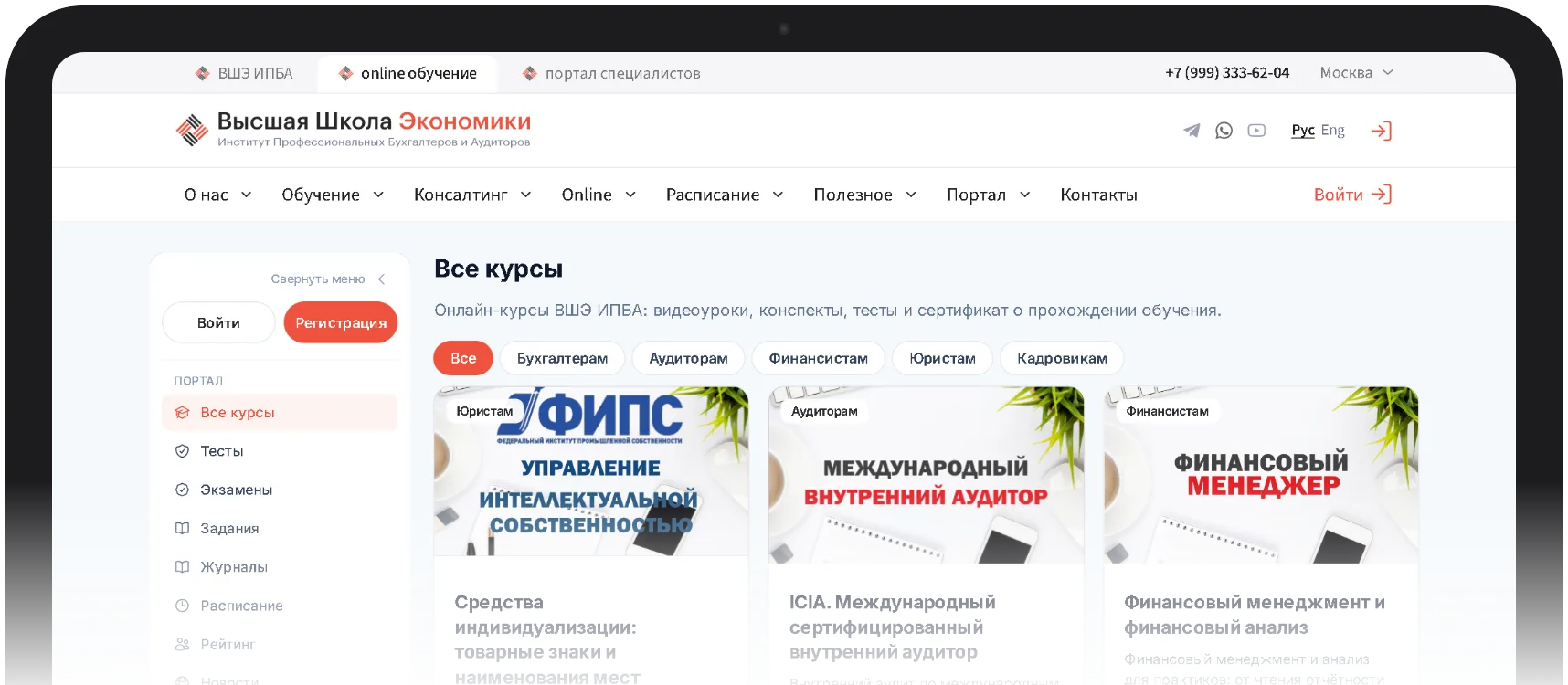
A personal account with a clear interface: manage your training, track your progress and communicate with instructors in one place.
All lectures, presentations and assignments in one place
A calendar with reminders of upcoming classes
Progress and completed assignments
Watch lectures at a convenient time
Didn't find an answer? Ask a question — a manager will reply and help you choose a program.
Ask a questionTraining is held once groups are formed, and the training time is agreed with the course participants. You can always study online at any convenient time on our portal on.hseipaa.kz.
The tuition fee is fixed and available in the schedule, but may be changed for corporate groups and regions.
Training is delivered by certified specialists with extensive practical and theoretical experience, as well as academic degrees and titles.
Training is held in our classrooms, on site at the client, online via the on.hseipaa.kz platform.
Training is held in our classrooms, on site at the client, online via the on.hseipaa.kz platform.
Depending on the training programme, we recommend reviewing the Training section on our website. With online training you can always see the exact duration of the course down to the minute.
120 000 ₸
Installments for 12 months
How the training on "Changes to the Tax Legislation of the Republic of Kazakhstan in 2026" is structured
The extended programme on "Changes to the Tax Legislation of the Republic of Kazakhstan in 2026" is aimed at the meaningful application of knowledge, not at a formal acquaintance with terms. The material is arranged from basic principles and professional logic towards the analysis of working situations. This order helps to see the connection between rules, documents, the specialist's actions and the result for the organisation. During the training, participants learn to ask clarifying questions, check source data, choose a well-founded way of solving a problem and explain their conclusions to colleagues and management.
Practical focus of the course
An important part of the training is work with examples close to real professional tasks. Instead of memorising mechanically, participants analyse conditions, identify significant factors, compare possible courses of action and assess the associated risks. Practical exercises help to consolidate the working algorithm: define the goal, collect the necessary information, check the constraints, prepare a decision and monitor its implementation. This approach is especially useful for specialists who need not only to know the requirements but also to apply them under time pressure.
What competences the programme develops
The course "Changes to the Tax Legislation of the Republic of Kazakhstan in 2026" develops systems thinking, attention to detail and the ability to work with professional information. Participants improve their skills in analysing documents and data, argumentation, preparing clear conclusions and interacting with stakeholders. Special attention is paid to typical mistakes: incomplete source data, formal execution of procedures, lack of verification and insufficient recording of the result. Analysing such situations makes it possible to see weak points in advance and build a more reliable work process.
Applying knowledge at work
The knowledge gained can be used in day-to-day duties, in preparing internal documents, in project work and in making management decisions. After the training, it is easier for a specialist to structure a task, determine the sequence of actions and choose control tools. The course materials can serve as a basis for self-study, for preparing working checklists and for discussing common approaches within the team. This improves the quality of decisions and reduces the dependence of the result on random or uncoordinated actions.
Who will benefit from the training
The programme is suitable for beginner and practising specialists, heads of functional departments, in-house consultants and employees of related areas. Beginners get a clear system of reference points and professional terminology. Experienced participants can compare their own practice with a consistent algorithm, refresh their knowledge and find points for improving processes. For managers, the course helps to formulate requirements for results more precisely and to monitor the quality of the team's work.
Result of completing the programme
On completion of the training, the participant gains a comprehensive picture of the topic "Changes to the Tax Legislation of the Republic of Kazakhstan in 2026", understands the logic of the main processes and is able to apply knowledge to practical situations. The expected result is not a set of disconnected facts but a working approach that can be adapted to the tasks of a specific organisation. For a lasting effect, it is recommended to use the training examples, complete the practical assignments and record, after each section, conclusions applicable to your own work.
Training in Kazakhstan can take place in person or remotely, according to the programme schedule. The current duration, cost, module composition and conditions for issuing a certificate should be confirmed on the course page or with the managers of the Higher School of Economics. This format makes it possible to choose a convenient way to take part in advance and to plan your professional development.
The main news for business is a radical change in rates and administration rules. The deadline for submitting a notification of the choice of tax regime is 1 March 2026.
To go beyond studying the dry articles of the law and obtain a step-by-step algorithm for working in the new reality, we invite you to take part in a specialised seminar that will be held online and will be available to participants across Kazakhstan, including cities such as Almaty, Astana, Shymkent, Atyrau and others.
Programme objective
To update the knowledge and strengthen the professional competence of participants in applying the provisions of the Tax Code of the Republic of Kazakhstan, taking into account the 2026 tax reform, and to build practical skills for working under strengthened tax administration and tax control.
The training programme is designed for an in-depth immersion in the new tax environment and includes:
TOPIC 1. General overview of the Tax Code of the RK 2026
TOPIC 2. Changes to tax regimes
TOPIC 3. VAT in 2026
TOPIC 4. CIT and PIT:
TOPIC 5. Payroll taxes. Social payments and the payroll fund
TOPIC 6. Comparative control
TOPIC 7. Grounds for ordering a tax audit
TOPIC 8. Final session
Our specialists will help you choose a program for your goals and answer all your questions. The consultation is free!


