 hseipaa.kz




Contract law
International contract law and resolution of civil-law disputes
 2 days of seminar
 Case analysis and handout materials
 Seminar participant certificate
165 100 ₸
/course
130 000 ₸
/course
“Online” — go to online learning: find a course, buy it and start right away

0
Seminar objective
The seminar equips lawyers and practitioners with a methodology for organising contract work amid changing legal regulation and case law.

Recommendations on drafting contracts

Formulating contractual terms

Tactics for protecting contractual rights
What you will master
 Methodology for organising contract work
Drafting contract proformas
Analysis of typical errors in drawing up contracts
Working with preliminary contracts and conditional transactions
Use of currency clauses in contracts
Ways of securing obligations
Choosing between a state court and international arbitration
Relevance of the programme
With the entry into force of the law on the Astana International Financial Centre, the possibilities for applying foreign law have expanded.

Comparative analysis
Institutions of international law and their Kazakhstani analogues.

Court practice
The latest trends in the development of practice under the Civil Code of the RK are taken into account.

Practical cases
Analysis of a case from the handout and review of the day's results.
Practical issues of concluding
A separate block is devoted to risks at the stage of drawing up and signing the contract.

Contract details
Preamble, contract dating, bank details and seal.

Signing
Use of facsimile signatures, verification of the signatory's authority, powers of attorney.

Challenging conclusion
Methods of countering a debtor's refusal to acknowledge that a contract was concluded.

Document exchange
Requirements for offer and acceptance, invoices, specifications, orders and letters of guarantee.
Who the training is suitable for
For corporate lawyers
For company lawyers
For contract management managers
For heads of legal services
For foreign economic activity specialists
For procurement specialists
For company heads
Programme content
A two-day seminar: general issues of contract law, securing obligations and dispute resolution.

2
days of the seminar

4
topic blocks

1
case analysis
- The principle of freedom of contract and its limits, unnamed contracts, mandatory norms, operation of a contract over time.
- Specifics of execution, consequences of evading conclusion of the main contract, suspensive and resolutive conditions.
- Details, dating, facsimile, verification of authority, conclusion of contracts by exchange of documents.
- Time, place and moment of performance, currency clauses in conditions of an unstable exchange rate.
- Pledge, set-off of counterclaims, novation of obligations, termination by impossibility of performance.
- Force majeure, unilateral termination of a contract, choosing between a state court and international commercial arbitration.
Course price
130 000 ₸

Learn now, pay later!
15 822
₸/mo
12 458
₸/mo
Installments for 12 months
15%
Enroll in the course or get a free consultation
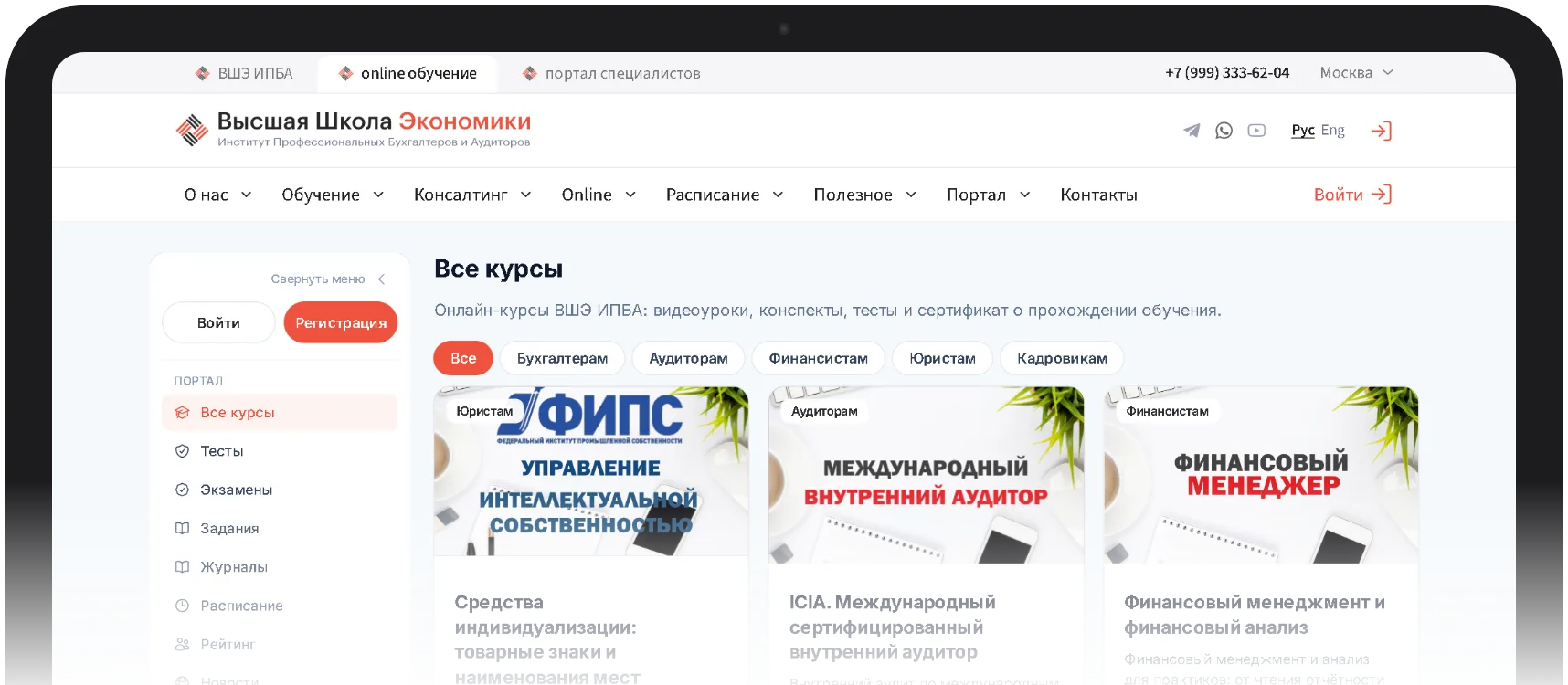
A convenient learning platform
A personal account with a clear interface: manage your training, track your progress and communicate with instructors in one place.
Training materials
All lectures, presentations and assignments in one place
Class schedule
A calendar with reminders of upcoming classes
Progress
Progress and completed assignments
Video lectures
Watch lectures at a convenient time
FAQ
Frequently asked questions?
Didn't find an answer? Ask a question — a manager will reply and help you choose a program.
Ask a question01 When is the training held?
Training is held once groups are formed, and the training time is agreed with the course participants. You can always study online at any convenient time on our portal on.hseipaa.kz.
02 What is the cost of training?
The tuition fee is fixed and available in the schedule, but may be changed for corporate groups and regions.
03 Who conducts the training?
Training is delivered by certified specialists with extensive practical and theoretical experience, as well as academic degrees and titles.
04 Where is the training held ?
Training is held in our classrooms, on site at the client, online via the on.hseipaa.kz platform.
05 How long is the course?
Training is held in our classrooms, on site at the client, online via the on.hseipaa.kz platform.
06 How long is the course?
Depending on the training programme, we recommend reviewing the Training section on our website. With online training you can always see the exact duration of the course down to the minute.
Course price
130 000 ₸
Learn now, pay later!
15 822
₸/mo
12 458
₸/mo
Installments for 12 months
15%
Enroll in the course or get a free consultation
About the “Contract law” program
Contract Law. International Contract Law. Resolution of Civil-Law Disputes in Court
Target audience:
In-house lawyers (company lawyers) and managers specialising in the company's contract work
Purpose of the seminar:
Specialists working in contract practice (lawyers, managers) must be fully conversant with the main provisions of the Civil Code of the RK and be up to date with all the latest trends in the development of judicial practice.
The purpose of this seminar is to equip lawyers and other practitioners with a methodology for organising contract work in conditions of fluid and uncertain legal regulation and judicial practice. The seminar will discuss the main methods of managing legal risks in contractual relations and recommendations on drafting contracts and formulating contractual terms.
Participants in this seminar will be able to significantly improve their qualifications and level of professional knowledge in a short time and get answers to the most pressing questions of contract law. During the seminar, participants are given numerous practical recommendations on organising contract work, drafting contract templates and tactics for protecting contractual rights.
The choice of foreign law has long been one of the most popular ways of determining the applicable law when Kazakhstani companies conclude transactions with foreign counterparties. With the adoption of the Constitutional Law of the RK «On the Astana International Financial Centre» and its entry into force on 1 January 2024, many provisions have appeared that make it possible to implement instruments in demand in contract practice by resorting to foreign law. The task of this seminar is a comparative analysis of institutions of international law and their Kazakhstani counterparts, and a study of the prospects for using the relevant contractual instruments in contract practice.
Programme content:
Day 1.
General issues of contract law. Practical issues of concluding a contract.
- The principle of freedom of contract and its limits. Unnamed contracts (differences between theory and practice, risks of concluding non-standard contracts, analysis of specific examples). Distinguishing mandatory and dispositive norms (limits of the mandatory nature of civil law norms, the possibility of the parties agreeing terms that violate mandatory norms, and other issues).
- Operation of a contract over time (giving contract terms retroactive effect, operation of contract terms in the event of termination, etc.). - Preliminary contract (specifics of drafting and the legal relations it creates, consequences of evading conclusion of the main contract, compelling conclusion and recognition of a contract as concluded, etc.).
- Conditional transactions (procedure for fixing a suspensive or resolutive condition, the possibility of fixing in a contract conditions that depend wholly or partly on the will of one of the parties, admissibility of an offer or acceptance subject to a condition.).
- Practical recommendations on drafting contracts. Analysis of typical mistakes made when drafting contracts. Current problems in drawing up contract details (preamble, problems of dating a contract, bank details, seal, etc.).
- Practical issues of signing a contract (use of a facsimile signature, mechanisms for initial verification of the authenticity of a signature, analysis of cases of forgery and possible abuses, etc.).
- Technological aspects of countering fraudulent actions by unscrupulous counterparties and protecting a contract from falsification (necessary clauses, features of placing the contract text, initialling, stitching, etc.).
- Essential terms of a contract. Methodology for determining essential terms.
- Verifying a person's authority when concluding a contract (list of documents to check, assessing the risk of dismissal, mechanisms for independent verification of status).
- Verifying a representative's authority when concluding a contract (representation «from the circumstances», practical problems of drawing up powers of attorney, the possibility of transferring the right of signature under a power of attorney, assessing the risk of revocation of a power of attorney, treating an order as a power of attorney, etc.).
- Consequences of a representative's lack of authority or exceeding it. Current issues of proving subsequent approval of a transaction under Article 165 of the Civil Code.
- Practical issues of concluding contracts by an «acting» head of an organisation (the legal nature of an «acting» head, verification of authority, analysis of recent judicial practice, etc.).
- Conclusion of contracts by heads of branches and representative offices (the legal status of the head of a branch/representative office, typical mistakes in drawing up contracts, etc.). - Bad-faith challenging by a debtor of the fact that a contract was concluded, where the debtor is unwilling to bear liability under the contract or has lost interest in the transaction owing to a change in economic conditions. Methods of effectively countering a debtor's possible refusal to acknowledge that a contract was concluded on various grounds (including because the head or representative exceeded their authority, absence or revocation of a power of attorney, refusal to acknowledge the authenticity of a signature, absence of essential terms, etc.).
- Concluding contracts by exchanging documents. Requirements for drawing up an offer and acceptance (acceptance period, the possibility of acceptance with reservations, etc.). Preparing invoices, specifications, orders, letters of guarantee and other similar documents. Concluding contracts by fax, telegraph and other technical means (analysis of the main advantages and risks).
- Practical issues of using protocols of disagreement (determining the moment a contract is concluded, cases of performing obligations before the terms of the contract are finally agreed, etc.).
- Features and options for structuring long-term contractual relations. The legal status of a framework contract. The possibility of including in a framework contract an obligation to make or agree offers (to purchase goods, order services or works). Allocation of essential and other terms between the framework contract and a supplementary agreement. Agreeing a supplementary agreement by exchanging documents and by conduct. The structure of a contract providing for performance «on orders» from one of the parties. Subscription contract.
Analysis of a works contract (the template provided in the handout)
Problematic issues in performing contractual obligations
- Typical mistakes in documenting acceptance of performance (waybills, acceptance and transfer certificates, work acceptance certificates, etc.). Procedure for verifying authority to accept goods, works or services.
- Consequences of performing an obligation in favour of an unauthorised person. Countering bad-faith actions by a debtor who denies receiving goods, works or services.
- Assigning performance of an obligation to third parties (risk analysis, drafting procedure, planned amendments to Article 313 of the Civil Code, etc.).
- Time for performance of an obligation (the possibility of setting in a contract a delivery or performance period that starts running from the moment a prepayment is made, problems of recording delay where the contract has no deadline, the mandatory sending of a claim, etc.)
- Place and moment of performance of an obligation (determining the moment of performance of a monetary obligation in non-cash settlements, ways of fixing the place of performance of an obligation to deliver goods in various contracts, etc.).
- Methods of effectively using currency clauses in a contract given an unstable exchange-rate environment (alternative methods of fixing the rate, multi-currency clauses, determining the rate at the creditor's choice, features of determining the annual interest rate on foreign-currency debts, the currency of the claim, etc.)
- Review of the case, provided in the handout
- Review of the day, questions and answers
Current issues of securing obligations
- Pledge (the subject of the pledge and its valuation, pledge of future things and rights, securing future obligations and obligations described in general terms by a pledge, the right of pursuit, consequences of loss or depreciation of the pledged property, use and disposal of the subject of the pledge, the pledgee's protection of its rights to the subject of the pledge, bona fide acquisition of the subject of the pledge from the pledgor, out-of-court foreclosure on pledged property, pledge of goods in circulation, etc.
- Suretyship (drafting procedure, essential terms, termination of suretyship, consequences of changes to the secured contract, consequences of the debtor's death or liquidation, etc.).
- Guarantee (abstract nature, relationship to suretyship, grounds for challenge, prospects for introducing the institution of an independent guarantee, etc.).
- Deposit (relationship between penalty and deposit, the possibility of including a deposit clause in a preliminary contract, etc.).
- Retention (relationship between retention and suspension of reciprocal performance, grounds for using retention, etc.).
- Unnamed methods of security (security payments, escrow agreement, REPO transactions, insurance of risks (liability), etc.).
- Review and analysis of the case provided in the handout
Problematic issues in terminating contractual obligations
- The possibility of terminating obligations in the event of improper performance.
- Current problems of set-off of counterclaims (procedure for effecting and challenging set-off, specifics of set-off by agreement of the parties, the concept of homogeneity of claims, the possibility of set-off of claims for payment of penalties and other punitive sanctions, etc.).
- Effective use of novation of obligations (the possibility of novating obligations where the limitation period has expired, novation of obligations to pay penalties and damages, distinguishing novation from a simple change of contract terms, the «discharge» of security as a consequence of novation, etc.).
- Termination of obligations by impossibility of performance. The difference between force majeure and temporary impossibility of performance. Including in a contract a «waiting period» clause in case of temporary impossibility. Allocation of the risks of impossibility of performance between the parties to the contract. Consequences of the revocation of a counterparty's licence for the fate of the contract.
- Unilateral withdrawal from a contract by law or under the contract.
- Determining the most effective model for hearing foreign trade disputes. Choosing between a state court and international commercial arbitration. The main advantages, disadvantages and features of hearing disputes in international commercial arbitration
Day 2.
- Fundamentals of contract law
- Basic principles of the contract law of Kazakhstan;
- Applicable law;
- Language requirements for a contract;
- Form and content of a contract;
- Essential terms of a contract
- Mechanism and date of concluding a contract with a non-resident;
- Amendment and termination of contractual obligations;
- Amendment and termination of contractual obligations;
- Grounds for termination of obligations;
- Organisation and technique of contract work with non-residents;
- Securing performance
- Letter of credit
- Types of letters of credit
- Rules on letters of credit
- Guarantees
- UNCITRAL fundamentals and principles
- Tender guarantees (tender guarantee)
- Performance guarantees (performance guarantee)
- Performance bond
- Stand by letter of guarantee
- Bank guarantees
- Exim guarantees (ECA)
- Suretyships
- Pledges
- Retention
- Insurance
- Indemnity under English contract law
- Letter of credit
- Financing of international trade
- Bank loans
- Exim financing
- Financial leasing
- Factoring
- Delivery under Incoterms
- Ex Works
- Free Carrier
- Carriage Paid To
- Delivered at
- Free on Board/Alongside Ship
- Cost and Freight/Insurance and Freight
- FIDIC contracts with non-residents
- Red Book
- White Book
- Orange Book
- Yellow Book
- Short Form
- Turnkey contract (EPC)
- Contracts for the supply of equipment, construction and design.
- Alternative forms of resolving civil and commercial (economic) disputes. Mediation
- Legislation on arbitration courts and international commercial arbitration. Concept, essence, parties and powers of international arbitration.
- Mediation. Legal regulation of mediation in the RK. Areas of application of mediation. Principles and stages of mediation.
Review of the day, questions and answers
Wrap-up. Summing up
Not sure which program to choose?
Our specialists will help you choose a program for your goals and answer all your questions. The consultation is free!
Reach us in one click: call us.
+7 (727) 224-21-21
contact us via messengers


