 hseipaa.kz




Training for trainers
A three-day programme for professional and novice business trainers: creating a training and 20 methods of delivering it
 3 days
 20 business training methods
 Participant certificate
“Online” — buy this course in online learning and start right away in your account

0
About the programme
For professional trainers it is an opportunity to upgrade qualifications, systematise knowledge and enrich experience. For beginners — to learn the basic laws of the profession and obtain all the necessary information on working with the client and the group.

Writing a training programme to a company's request

Conducting training and managing group dynamics

Working with an unmotivated or aggressive group
What you will get
 Systematic knowledge of the business trainer profession
The ability to diagnose the company's training needs
Skill in writing a training programme and script
Mastery of 20 business training methods
Tools for managing group dynamics
Techniques for dealing with group aggression
Participant certificate
Advantages of the programme
80% practice: an interactive methodology with active involvement of participants

80% practice
The ratio of theory to practice is 20% to 80%: methods are practised on oneself

Interactive methodology
Mini-lectures, discussions, moderation, facilitation, cases, role plays, video analysis, brainstorming, sharing

Full cycle
From the interview with the customer and writing the programme to completing the training and recording the results
What will be required
The programme suits both experienced and novice trainers

Interest in the profession
No special preparation is required

3 days of attendance
The programme is designed for three days

Readiness for practice
80% of the time is active work in groups and pairs

Openness to feedback
Video analysis and review of participants' behaviour
Who this programme is for
Professional business trainers
Novice trainers
Internal trainers of companies
HR specialists and training specialists
Heads of training centres
Facilitators and moderators
Consultants running group formats
Course content
Day 1 — creating a training session, days 2 and 3 — business training methods

3
days of training

20
business training methods

80%
practice
- Interview with the main customer and clarification of goals and objectives, observation of the future participants' activities "in the field", participant surveys, writing a programme to the company's request and the structure of a successful programme, post-training activities
- Training scenario, competencies of a professional trainer, group dynamics, dealing with group aggression
- The first minutes of a training session, sociometry as a method of rapid diagnostics, mini-lecture: preparation, logic and composition of a presentation, rhetorical techniques, facilitation and its algorithm
- Group discussion as a method of systemic action and the goals achieved with it, moderation as a method of forming a common conceptual field, elementary and complex thematic exercises
- Brainstorming as a method of creative breakthrough and the creation of a new business product, ready-made cases and self-composed cases, simple role-plays and role-plays with a hidden motive, instructions and analysis of participants' behaviour
- A metaphorical business game and work with participants' attitudes, pantomime, projective tests and questionnaires, sharing as a method of balancing the psycho-emotional state, closing the training and receiving feedback
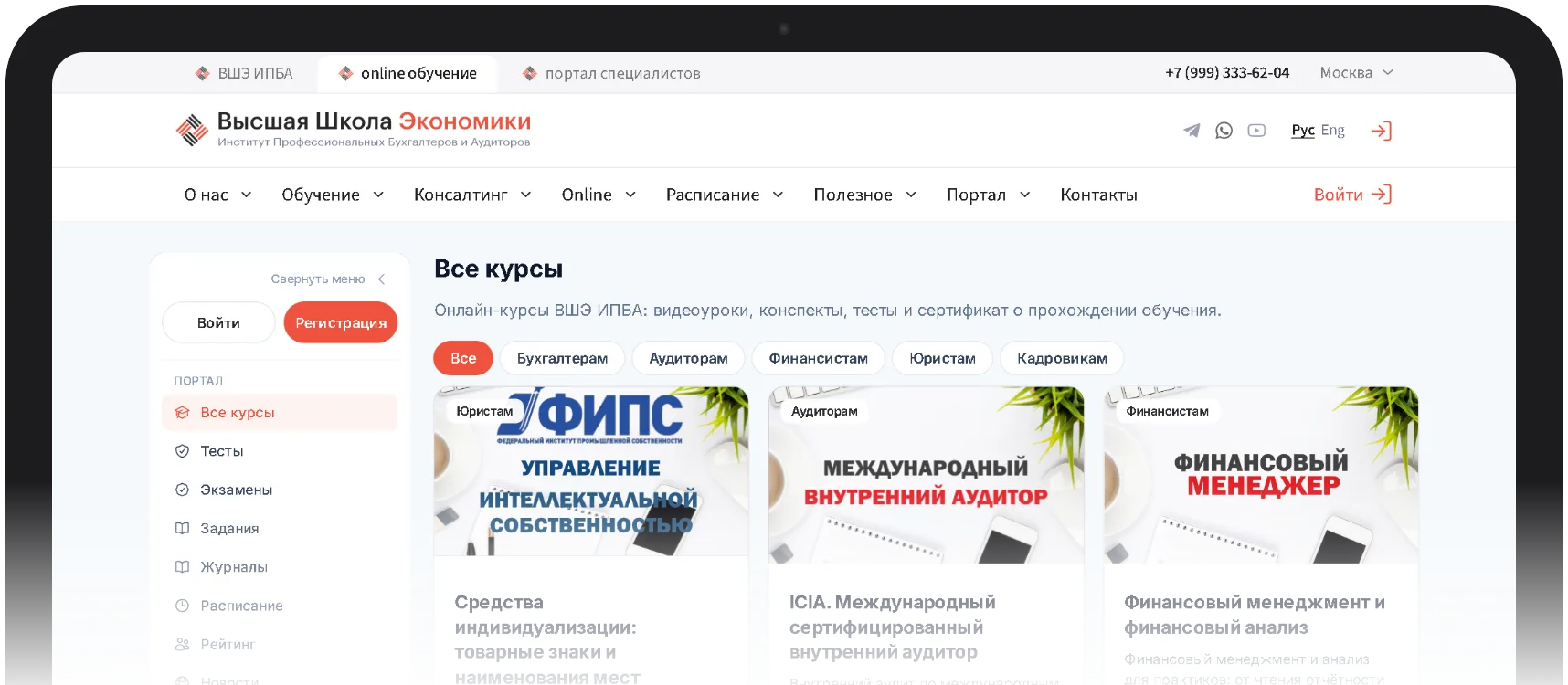
A convenient learning platform
A personal account with a clear interface: manage your training, track your progress and communicate with instructors in one place.
Training materials
All lectures, presentations and assignments in one place
Class schedule
A calendar with reminders of upcoming classes
Progress
Progress and completed assignments
Video lectures
Watch lectures at a convenient time
FAQ
Frequently asked questions about the «Training for Trainers» course
Didn't find an answer? Ask a question — a manager will reply and help you choose a program.
Ask a question01 Who is the «Training for Trainers» course for?
The course is suitable for specialists who need to systematise their knowledge of "Train the Trainer", improve their qualifications and apply new skills at work.
02 What does the course programme include?
The programme covers the key requirements, professional tools and practical aspects of the course topic — a three-day programme for professional and novice business trainers: creating a training and 20 methods of delivering it.
03 Are practical classes included?
Yes. Theory is reinforced with practical assignments, examples and professional situations so that learners can apply their knowledge at work.
04 What are the duration and format of the training?
Training format: 3 days. Duration: 20 business training methods.
05 What document is issued after the training?
After successful completion of the course, a Certificate of Participation is issued. The terms of the final assessment are communicated before classes begin.
About the “Training for trainers” program
Course objective: for professional trainers, this is an opportunity to improve their qualifications, systematise their knowledge and enrich their experience.
For novice trainers - to learn the basic laws of the profession and obtain all the necessary information on how to diagnose a client's business processes and select the right training for them, how to write a training programme and how to deliver it; how to manage group dynamics and work with an unmotivated or aggressive group. In general, for all participants - how to make their training as interesting and useful as possible for participants and for the client, and how to be successful in the chosen profession.
Delivery methods: The trainings are based on an interactive methodology - active involvement of participants in the learning Process. The main methods: mini-lectures, group discussions, moderation, facilitation, work in pairs and small groups, presentations, case study and analysis, metaphorical business and role-playing games, video analysis, brainstorming, sociometry, sharing. The ratio of theory to practice: 20% to 80%.
Course content
| Day 1 CREATING A TRAINING |
|
| 1. | Diagnosing the company's training needs 1. Interview with the main client. Clarifying goals and objectives 2. Observing the activities of future training participants "in the field" 3. Surveying participants 4. Writing a training programme for the company's request. The structure of a successful programme. 5. Post-training activities |
| 2. | Training script |
| 3. | Competencies of a professional trainer |
| 4. | Group dynamics |
| 5. | Working with group aggression |
| Days 2 and 3 BUSINESS TRAINING METHODS | |
| 6. | The first minutes of a training |
| 7. | Sociometry in training as a method of rapid diagnostics |
| 8. | Mini-lecture. How to prepare a mini-lecture. Logic and composition of a presentation. Rhetorical techniques |
| 9. | Facilitation as a method of engaging the attention of training participants. Facilitation algorithm |
| 10. | Group discussion as a method of systemic action in business training. Business training goals that can be achieved through group discussion. Delivery algorithm |
| 11. | Moderation as a method of building a shared conceptual field in a group. Delivery algorithm |
| 12. | Thematic exercises as methods of organising practice in business training: 1. Elementary thematic exercise 2. Complex thematic exercise |
| 13. | Brainstorming as a method of creative breakthrough and creating a new business product. Brainstorming algorithm A method for independently designing a brainstorm for the business problem of a client |
| 14. | Cases as a business training method. Ready-made cases and their areas of application. How to independently create and run a case in a training |
| 15. | Role-playing game as a business training method. Algorithm and rules for running role-playing games. Designing simple role-playing games and role-playing games with a hidden motive. How to write instructions for each type of role-playing game. Analysing participants' behaviour in role-playing games |
| 16. | Video analysis as a method of analysing participants' behaviour in role-playing games and group discussions. |
| 17. | Metaphorical business game as a method of working with changing training participants' attitudes. Algorithm for running a metaphorical business game. |
| 18. | Pantomime as a business training method. Delivery algorithm |
| 19. | Using tests as a method in business training. Projective tests and questionnaires. How to conduct testing and process the results in a training |
| 20. | Sharing as a method of balancing the psycho-emotional state in a group. Sharing algorithm Closing the training. Summing up. Obtaining feedback from the group and recording the results |
Not sure which program to choose?
Our specialists will help you choose a program for your goals and answer all your questions. The consultation is free!
Reach us in one click: call us.
+7 (727) 224-21-21
contact us via messengers


