 hseipaa.kz




Professional development for notaries
A 72-academic-hour programme for practising notaries of Kazakhstan
 72 academic hours
 Classes 3–5 times a week from 9:00 to 18:00
 Final assessment in the form of a test
“Online” — go to online learning: find a course, buy it and start right away

0
About the professional development programme for notaries
The programme is aimed at studying trends in the development of the national notary profession, a systematic analysis of changes in legislation and work with modern information and telecommunication systems.

Specific features of performing certain types of notarial acts

Interaction with information systems, registers and their operators

Reducing the risks of a notary's property liability
What students master
 Skills in performing new notarial acts
Information interaction with state bodies
Using the unified information system of notaries (UIS)
Knowledge of the current legislation of the RK and international legal acts
Foreign law norms applied in notarial practice
Independently resolving complex issues of notarial law enforcement
Improving the quality of legal assistance to citizens and legal entities
How the training is organised
Practice-oriented classes, a modular approach and experienced instructors

In person and remotely
At least 70% of the hours are held in person and up to 30% remotely via webinars and conferences.

Modular principle
Training can be built on step-by-step mastery of individual disciplines and modules.

Practitioner instructors
Practising notaries, lawyers, executives and leading officials of state bodies are involved in the process.
Organisation and attestation
Requirements for the study regime and for assessing the quality of programme mastery

Duration of study
The programme is designed for 72 academic hours.

Class schedule
Classes are held three to five times a week from 9:00 to 18:00, on weekdays and weekends.

Final assessment
An exam on the whole programme in the form of testing using a test set for each topic.

Pass threshold
A learner who answers correctly 75 per cent or more of the test questions is considered to have passed the assessment.
Who the training is suitable for
Practising notaries
Notary assistants
Trainees of notary offices
Employees of notary chambers
Lawyers who work with notarial acts
Specialists in notarial record-keeping
Candidates for obtaining a notary licence
Subjects of the curriculum
The curriculum shows the names of disciplines, the number of hours and forms of assessment

72 academic hours
programme volume

70 / 30
in-person and distance part, %

75%
attestation pass threshold
- Organisation of notaries' activities in Kazakhstan.
- Records management and document preparation.
- Specifics of performing certain types of notarial acts.
- Application of civil law provisions in notarial practice.
- Application of the rules of private international law and other branches of legislation.
- Theory and practice of using the unified information system of the notary service.
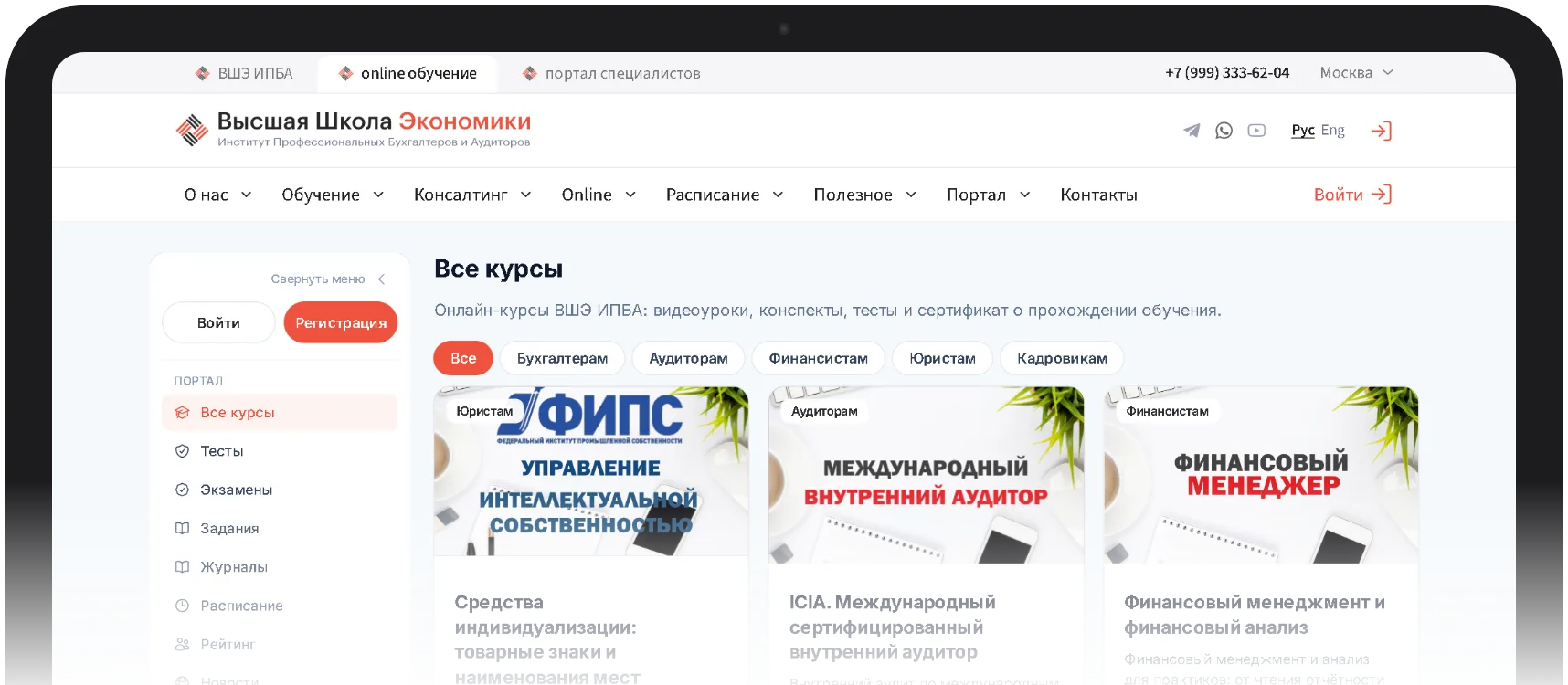
A convenient learning platform
A personal account with a clear interface: manage your training, track your progress and communicate with instructors in one place.
Training materials
All lectures, presentations and assignments in one place
Class schedule
A calendar with reminders of upcoming classes
Progress
Progress and completed assignments
Video lectures
Watch lectures at a convenient time
FAQ
Frequently asked questions?
Didn't find an answer? Ask a question — a manager will reply and help you choose a program.
Ask a question01 When is the training held?
Training is held once groups are formed, and the training time is agreed with the course participants. You can always study online at any convenient time on our portal on.hseipaa.kz.
02 What is the cost of training?
The tuition fee is fixed and available in the schedule, but may be changed for corporate groups and regions.
03 Who conducts the training?
Training is delivered by certified specialists with extensive practical and theoretical experience, as well as academic degrees and titles.
04 Where is the training held ?
Training is held in our classrooms, on site at the client, online via the on.hseipaa.kz platform.
05 How long is the course?
Training is held in our classrooms, on site at the client, online via the on.hseipaa.kz platform.
06 How long is the course?
Depending on the training programme, we recommend reviewing the Training section on our website. With online training you can always see the exact duration of the course down to the minute.
About the “Professional development for notaries” program
Notary training course and qualification
The professional development programme is aimed at enabling learners to study the main trends in the development of the national notary profession, to analyse in detail and systematically the changes in legislation concerning the organisation of notaries' activities and the specifics of performing particular types of notarial acts, and to master ways of interacting with modern information and telecommunication systems, resources, registers and their operators.
The programme is designed to broaden knowledge of the current legislation of Kazakhstan, international legal acts and the rules of foreign law applied in notarial practice, and to build skills in independently resolving the most complex issues of notarial law enforcement, which helps to improve the quality of the legal assistance that notaries provide to citizens and legal entities and to reduce the risks of notaries' financial liability.
Programme of the Notary Training Course
The Programme includes practice-oriented classes, aimed at mastering:
- skills for performing new notarial acts
- participation in information exchange with government bodies when carrying out notarial activity
- use of the unified information system of the notary profession (hereinafter - the UIS).
Duration of study:
72 academic hours.
Study schedule:
Classes are held three to five times a week from 9.00 to 18.00 (with breaks for rest and meals). Classes may be held on weekdays as well as at weekends (Saturday, Sunday).
Study under the Programme may be built on a modular principle, providing for phased (discrete) mastery of individual disciplines (modules).
Form of study:
Full-time and distance study via the information and telecommunication network "Internet" (webinars, conferences). In this case, the ratio of full-time to distance study in delivering the 72-hour Programme must be at least 70% of study hours in the full-time form and 30 % in the distance (electronic) form.
Programme content:
The Programme provides for a curriculum and a thematic study plan. The curriculum shows the names of the disciplines (modules), the number of class hours (including the number of lectures, practical classes and independent work) and the forms of assessment.
The curriculum of the Programme must include the following disciplines:
- legal foundations of notarial activity in Kazakhstan;
- notarial records management;
- specifics of performing particular types of notarial acts;
- application of civil legislation provisions in notarial practice;
- application of private international law rules in notarial practice;
- application of provisions of other branches of legislation in notarial practice;
- UIS: theory and practice of use, entering data into the UIS, providing data from the UIS, new developments in legal regulation.
Information on the staffing of the programme.
The educational process in the disciplines (modules) is delivered by academic and teaching staff who hold a basic education corresponding to the profile of the discipline (module) and an academic degree or experience in the relevant professional field, and who are systematically engaged in research and/or academic-methodological work. In addition, the teaching staff take part every year in seminars held by the notarial chamber, as well as in topical issues of law enforcement practice, in order to inform learners attending professional development courses about law enforcement practice in line with the official position of the notarial chamber and the state executive bodies of the RK.
Instructors from among practising notaries and advocates, as well as current heads and leading employees of state bodies and specialised organisations, may also be involved in the educational process in the disciplines (modules).
Assessment of the quality of mastering the programme
The quality of mastering the programme is assessed through a final assessment in the form of an examination covering the entire study programme (testing) using a test set (test tasks reflecting the content of each topic of the additional professional education programme)..
Object of assessment: test tasks reflecting the content of each topic of the Programme.
A learner who answers 75 or more percent of the test tasks correctly is considered to have passed the Final assessment. When evaluating the results of the testing, a scale of assessment criteria should be used, by which the level of knowledge is determined by calculating the percentage of correct answers.
Qualification document issued:
Persons who have successfully mastered the Programme and passed the final assessment are issued a professional development certificate.
Not sure which program to choose?
Our specialists will help you choose a program for your goals and answer all your questions. The consultation is free!
Reach us in one click: call us.
+7 (727) 224-21-21
contact us via messengers


