 hseipaa.kz




Intellectual property law
Trademarks, patents, computer programs and transactions with exclusive rights
 Lectures and analysis of case law
 5 thematic blocks
 Certificate of completion of the course
“Online” — go to online learning: find a course, buy it and start right away

0
What this course is about
The programme introduces the novelties of intellectual property legislation, approaches to their interpretation and real application practice. Participants ask questions of practising experts in this field.

Patent legislation and rights to inventions

Rights to computer programs and integrated circuit topologies

Transactions and contracts in the field of intellectual property
What you will analyse on the course
 Types of trademarks and terms of legal protection
Disputes on conflicts of trademarks in court practice
Refusals of registration, priority of a mark and filing objections
Conditions of patentability of an invention and terms of protection
Employee inventions and payment of remuneration to authors
The protection of industrial designs and utility models
Franchising, pledge and trust management agreements
Training format
The course is taught by expert practitioners working in the field of intellectual property.

Legislative novelties
We review recent changes and approaches to their interpretation.

Real practice
We rely on court cases and experience in applying the legislation.

Answers to questions
Participants can ask their questions directly to the experts.
Practical difficulties
Special attention is paid to issues where disputes most often arise.

Challenging protection
Invalidation of the granting of legal protection.

Errors in applications
Typical errors in preparing applications and the legal status of a patent attorney.

Secret inventions
Features of legal protection and use.

International treaties
Application of international treaties and agreements.
Who the training is suitable for
For company lawyers
For patent attorneys
For trademark specialists
For IT companies and developers
For right holders and authors
For business leaders
For licensing specialists
Curriculum
Five blocks — from means of individualisation to transactions with exclusive rights.

5
programme blocks

4
types of contracts

online
class format
- Types of trademarks, terms of protection, a well-known mark, appellation of origin of goods.
- Similarity of goods, distinctiveness, refusals of registration, priority and objections.
- Conditions of patentability, employee inventions, grant and contesting of a patent, industrial designs and utility models.
- Scope of copyright and related rights, protection of software products, free use, disposal of rights.
- Assignment of exclusive rights, licence and sublicence agreements, compulsory licence, franchising.
- Pledge, trust management, contribution of rights to charter capital, formalising rights in supply and works contracts.
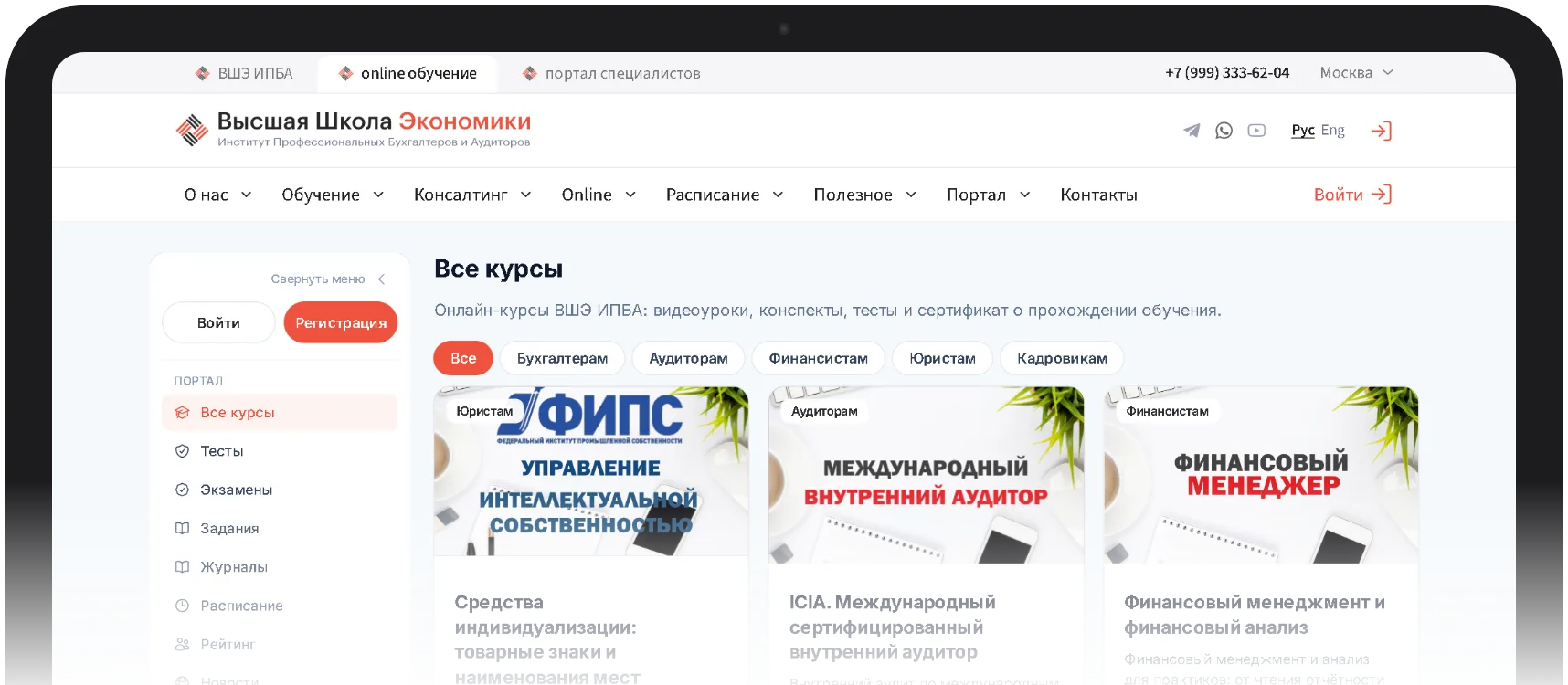
A convenient learning platform
A personal account with a clear interface: manage your training, track your progress and communicate with instructors in one place.
Training materials
All lectures, presentations and assignments in one place
Class schedule
A calendar with reminders of upcoming classes
Progress
Progress and completed assignments
Video lectures
Watch lectures at a convenient time
FAQ
Frequently asked questions about the course "Intellectual Property Law"
Didn't find an answer? Ask a question — a manager will reply and help you choose a program.
Ask a question01 Who is the "Intellectual Property Law" course suitable for?
The course is suitable for specialists who need to systematise their knowledge of “Intellectual Property Law”, improve their qualifications and apply new skills in their work.
02 What does the course programme include?
The programme covers the key requirements, professional tools and practical aspects of the course topic — trademarks, patents, computer programs and transactions with exclusive rights.
03 Are practical classes included?
Yes. Theory is reinforced with practical assignments, examples and professional situations so that learners can apply their knowledge at work.
04 What are the duration and format of the training?
Training format: Lectures and analysis of case law. Duration: 5 thematic blocks.
05 What document is issued after the training?
After successful completion of the course, a Certificate of Course Completion is issued. The terms of the final assessment are communicated before classes begin.
About the “Intellectual property law” program
During the training you can learn about new legislation and approaches to its interpretation, real practice in applying the law and new approaches to solving old problems. Participants can ask questions of interest to practising experts working in the field of intellectual property.
- Legal protection of means of individualisation of goods, works and services.
Commentary on the practice of applying trademark legislation (types of trademarks, term of legal protection, features of the legal protection of a well-known trademark, etc.). Disputes over conflicts between trademarks and other means of individualisation in case law (determining the similarity of goods, the distinctive capacity of marks, etc.). Current legal issues in trademark registration (analysis of cases of refusal of registration, trademark priority, filing objections, etc.). Case law. Challenging and invalidating the grant of legal protection. Features of the legal protection of appellations of origin. Application of international treaties and agreements.
- Current issues in applying patent legislation.
The legal regime of an invention (conditions of patentability, terms of protection, etc.). Features of relations with the authors of inventions (service inventions, payment of remuneration, etc.). Problematic issues of granting and challenging a patent (legal status of a patent attorney, errors in drawing up applications, analysis of cases of refusal of registration, provisional protection, challenging and invalidity of a patent, etc.). Features of the legal protection and use of secret inventions. Features of the legal protection of industrial designs and utility models. Application of international treaties and agreements.
- Rights to computer programs and integrated circuit layout designs.
The scope of copyright and related rights in software, protection and safeguarding of software products within the framework of the law. Cases of free use of computer programs. Software development. Features of disposing of rights to computer programs. Main provisions of the legal regulation of integrated circuit layout designs.
- Legal protection of other types of intellectual property.
Issues of using intellectual property on the Internet and the legal protection of domain names. Protection of rights to trade secrets (know-how). New developments in the conditions for classifying information as know-how under the Civil Code of the RK. Legal features of protecting and safeguarding rights to a trade name.
- Current legal issues in concluding transactions with intellectual property.
Changes in the conditions and procedure for disposing of exclusive rights. Transfer of exclusive rights. A public offer, using an open licence under the Patent Law of the RK as an example, and the alienation of an exclusive right to the results of intellectual activity. Gratuitous granting of exclusive rights for use by third parties. Analysis of practical and legal issues in concluding, performing and terminating contracts on the alienation of exclusive rights (drawing-up procedure, possible ways of determining the price and payment procedure, main terms, consequences of breach, return of exclusive rights in the event of a material breach of the contract by the acquirer, etc.). Current issues in concluding, performing and terminating licence agreements (drawing up, types of licence agreement, new developments in the legal regulation of exclusive licences under the new version of the Civil Code of the Russian Federation, sub-licence agreement, compulsory licence, protection of the parties' rights in the event of breach of a licence agreement, material breach as a ground for terminating the contract, etc.). Practical problems in concluding a franchise agreement (comprehensive business licence). Features of drafting a contract depending on the nature of the exclusive rights transferred. Other transactions with intellectual property (pledge, trust management, contributing exclusive rights as a contribution to a company's charter capital, etc.). Features of formalising intellectual property rights in the performance of supply contracts, works contracts and certain other general civil contracts.
Not sure which program to choose?
Our specialists will help you choose a program for your goals and answer all your questions. The consultation is free!
Reach us in one click: call us.
+7 (727) 224-21-21
contact us via messengers


