 hseipaa.kz




Corporate law
A two-day seminar for corporate lawyers: novelties in corporate legislation, case law and support of corporate transactions
 2 days
 5 modules
 Professional development certificate
165 100 ₸
/course
130 000 ₸
/course
“Online” — buy this course in online learning and start right away in your account

0
About the seminar
Legislation on legal entities is constantly updated, and case law on corporate disputes is developing actively. The seminar is devoted to analysing key changes, practice trends and typical mistakes.

Analysis of gaps and contradictions in existing norms

Judicial and law enforcement practice in corporate disputes

Standardising knowledge of the company's internal corporate work
What you will get
 Comprehensive advanced training in corporate law
Understanding the novelties of legislation on legal entities
Ready-made solutions to real corporate situations
Analysis of typical errors in supporting transactions
Knowledge of ways to settle corporate disputes
Comparative analysis of the legal status of an LLP and a JSC
Professional development certificate
Advantages of the programme
The seminar is built on the practice of supporting corporate transactions and procedures

Practical orientation
Analysis of real situations and development of solutions that comply with the requirements of current legislation

Relevance
Analysis of the latest changes in corporate legislation and recent court practice

Systematic approach
From general provisions on legal entities to securities and the specifics of LLPs and JSCs
Who will need what
The programme is intended for lawyers who handle a company's internal corporate work

Legal education
Basic knowledge of the civil and corporate legislation of the RK

Corporate work experience
Keeping the documents of the general meeting, the board of directors and the supervisory board

2 days of classes
The seminar takes place over two days in five modules

Readiness for practice
Active participation in analysing cases and discussing solution options
Who this seminar is for
Corporate lawyers of companies
Lawyers handling in-house work
Specialists in documents of the general meeting of participants
Specialists in documents of the general meeting of shareholders
Secretaries of the board of directors and the supervisory board
Lawyers supporting corporate transactions
Heads of legal departments
Programme content
Five modules in two days: from general provisions on legal entities to corporate law issues in LLPs and JSCs

2
days of training

5
programme modules

LLP and JSC
comparative analysis
- Charter of a legal entity and model charters, share capital requirements, commercial and non-profit legal entities, the problem of affiliation, public joint-stock companies, reorganisation and liquidation, streamlining the system of non-profit organisations
- The concept and necessity of corporate governance, its significance for owners and the company, public and non-public companies, the agency conflict, international models and the specifics of Kazakhstan, the regulatory framework and the system of internal corporate documents
- Models of joint-stock company governance, competence and powers of governing bodies, features of single-shareholder companies, composition and structure of the board of directors, independent directors, rights and liability of board members, organisation of work, evaluation and remuneration system
- Review of the Civil Code and the Law of the RK “On the Securities Market”: general provisions, uncertificated securities, liability for the validity of rights under a security, transfer of rights and encumbrances, protection and restoration of rights
- Establishment of an LLP and its charter, rights and obligations of participants, exclusion and withdrawal of a participant, contributions to property, transfer of a share and pre-emptive right of purchase, inheritance of a share, governing bodies of an LLP, supervisory board, managing organisation
- Comparison of the legal status of an LLP and a JSC under the legislation of the RK, property relations between corporations and their participants, consequences of bodies exceeding their powers, spousal consent to the disposal of a share, relations between parent and subsidiary companies
Course price
130 000 ₸

Learn now, pay later!
15 822
₸/mo
12 458
₸/mo
Installments for 12 months
15%
Enroll in the course or get a free consultation
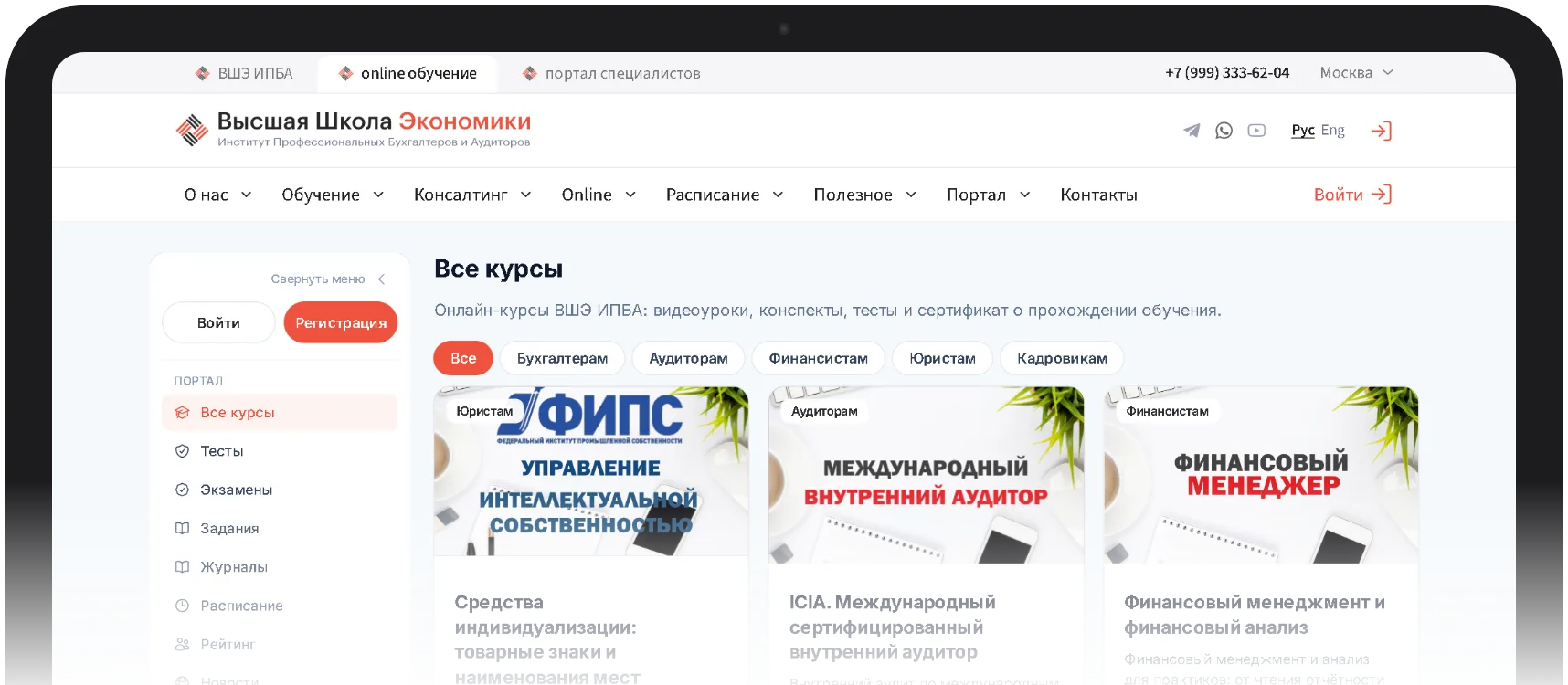
A convenient learning platform
A personal account with a clear interface: manage your training, track your progress and communicate with instructors in one place.
Training materials
All lectures, presentations and assignments in one place
Class schedule
A calendar with reminders of upcoming classes
Progress
Progress and completed assignments
Video lectures
Watch lectures at a convenient time
FAQ
Frequently asked questions?
Didn't find an answer? Ask a question — a manager will reply and help you choose a program.
Ask a question01 When is the training held?
Training is held once groups are formed, and the training time is agreed with the course participants. You can always study online at any convenient time on our portal on.hseipaa.kz.
02 What is the cost of training?
The tuition fee is fixed and available in the schedule, but may be changed for corporate groups and regions.
03 Who conducts the training?
Training is delivered by certified specialists with extensive practical and theoretical experience, as well as academic degrees and titles.
04 Where is the training held ?
Training is held in our classrooms, on site at the client, online via the on.hseipaa.kz platform.
05 How long is the course?
Training is held in our classrooms, on site at the client, online via the on.hseipaa.kz platform.
06 How long is the course?
Depending on the training programme, we recommend reviewing the Training section on our website. With online training you can always see the exact duration of the course down to the minute.
Course price
130 000 ₸
Learn now, pay later!
15 822
₸/mo
12 458
₸/mo
Installments for 12 months
15%
Enroll in the course or get a free consultation
About the “Corporate law” program
corporate law seminar for the audience: Corporate lawyers (company lawyers) specialising in the internal corporate work of a company.
Target audience:
Corporate lawyers (company lawyers) specialising in the internal corporate work of a company: keeping the documents of general meetings of participants, general meetings of shareholders, boards of directors and supervisory boards
Purpose of the seminar:
Legislation on legal entities is constantly being updated. Case law on the resolution of corporate disputes is developing actively. The practice of legal support for corporate transactions and procedures is constantly improving. All this raises many topical questions for lawyers working in this area. This seminar is devoted to analysing the key changes in corporate legislation, the main trends in case law, as well as topical practical problems of corporate law and the practice of supporting corporate transactions, discussing options for solving them and reviewing typical mistakes. Participation in this seminar will allow lawyers to comprehensively improve their qualifications in the field of corporate law.
The seminar is aimed at:
- Studying the novelties of Kazakhstan's civil (corporate) legislation, analysing gaps and contradictions in the current legislation;
- Developing acceptable solutions, in line with the requirements of current legislation, for real-life situations;
- Analysing case law and other law enforcement practice on the issues under consideration;
- Expanding knowledge in the field of corporate law and corporate relations.
- Standardising knowledge in the area of: the internal corporate work of a company; ways of settling corporate disputes
Programme content:
Day 1
Module 1. General provisions on legal entities
- Charter of a legal entity, model charters.
- Requirements for the charter capital
- Commercial and non-commercial legal entities
- The problem of affiliation
- Public joint-stock companies.
- Reorganisation of legal entities
- Liquidation of legal entities
- Streamlining the system of non-profit organisations
Module 2. Corporate governance (general provisions).
- The concept and necessity of corporate governance. The significance of corporate governance for owners, for the company and other stakeholders. The concept of "public" and "non-public" companies.
- The specifics of relations between owners and managers: the concept of the agency conflict.
- Main international models of corporate governance, specifics of corporate governance in Kazakhstan. Overview of the international and Kazakhstan regulatory framework of corporate governance (trends in the legislative regulation of corporate governance, corporate governance codes), regulatory requirements for the Company in the area of corporate governance.
- The system of internal corporate documents of a company.
Module 3. The board of directors as the core of corporate governance.
- The concept and features of a body of a joint-stock company.
- Models of managing a joint-stock company: concept and types.
- The relationship between the concepts of "competence", "authority" and "function" in joint-stock company legislation.
- Legal techniques for forming the competence of the management bodies of a joint-stock company.
- The procedure for forming the competence of the management bodies of a joint-stock company: basic provisions.
- The practice of applying legal techniques to transfer matters from the competence of one management body of a joint-stock company to the competence of another body.
- Specifics of forming management bodies in single-person companies.
- Topical problems and specifics of regulating the activities of the general meeting of shareholders, the board of directors (supervisory board) and executive bodies: theory and practice
- Management bodies of a joint-stock company, their powers and liability: the general meeting of shareholders, the board of directors, executive bodies.
- The purpose and functions of the board of directors. Board models.
- Composition and structure of the board of directors: requirements for the Company when preparing for a corporate governance rating. Executive, external and independent directors.
- Rights, duties and liability of board members.
- The role of the chairman of the board of directors.
- Organisation of the board's work. The board's work plan.
- Liability of board members. Liability insurance.
- Building an effective system of interaction between the board of directors and the Company's management. Division of competences between the Board of Directors and the Management Board.
- The system for evaluating and remunerating the board of directors.
Module 4. SECURITIES AS AN OBJECT OF CIVIL RIGHTS. REVIEW OF THE CIVIL CODE AND THE LAW OF THE RK «On the Securities Market»
- General provisions on securities
- Uncertificated securities.
- Liability for the validity of rights under a security
- Transfer of rights and creation of encumbrances on securities
- Protection of the violated rights of holders of securities
- Restoration of rights to securities
- Reclaiming uncertificated securities
Day 2
Module 5. Corporate law issues in LLPs and JSCs
ESTABLISHMENT OF AN LLP: the procedure for establishing an LLP, the charter of the company
RIGHTS AND OBLIGATIONS OF LLP PARTICIPANTS
- The concept and system of the principal and additional rights and obligations of an LLP participant
- Expulsion of a participant from an LLP
- Withdrawal of a participant from the company
- Contributions to the company's property
TRANSFER OF AN LLP PARTICIPANT'S SHARE OR PART OF A SHARE IN THE CHARTER CAPITAL OF THE LLP TO OTHER LLP PARTICIPANTS AND THIRD PARTIES: CONCEPT AND OPTIONS
- Sale or other alienation by an LLP participant of their share or part of a share in the charter capital of the company to another participant (participants) of the company
- Sale or other alienation by a participant of the company of their share or part of a share in the charter capital of the company to third parties
- Mechanisms for exercising by a participant and/or the LLP the pre-emptive right to purchase a share or part of a share when a share or part of a share is sold to a third party
- Transfer of a share or part of a share by inheritance, succession or on another lawful basis
MANAGEMENT BODIES OF AN LLP
- Choosing a management model for an LLP
- The concept, types and procedure for forming the management bodies of an LLP
- Specifics of forming management bodies in single-person LLPs
- The procedure for forming the competence of the management bodies of an LLP
- The general meeting of LLP participants: procedure for organising its work and adopting decisions
- The supervisory board of an LLP
- Executive bodies of the company
- The managing organisation (managing director) of an LLP: issues of theory and practice
- Comparative analysis of the legal status of limited liability partnerships and joint-stock companies under the legislation of the Republic of Kazakhstan. However, issues related to the regulation of the stock market will remain outside the scope of this seminar
- Analysis of property relations between corporations and their members (participants, shareholders), as well as between the members (participants, shareholders) of corporations themselves
- Issues of the competence of corporate bodies, and the consequences of their bodies (as a rule, executive ones) exceeding their powers
- Regulation of the procedure for an LLP participant to alienate their share in the charter capital
- The state's pre-emptive right to purchase subsoil use rights
- The need for a spouse's consent to the alienation of a share in the charter capital of an LLP and of JSC shares
- Corporate relations between parent and subsidiary companies in the area of management and liability
- Limits of liability of LLP participants and JSC shareholders for the debts of the limited liability partnership and the joint-stock company
- Corporate relations when decisions are taken by the supreme body of a corporation (separately – when increasing the charter capital of an LLP)
- Corporate raiding
Module 6. Antimonopoly control in corporate law
The concept of an affiliated person and a group of persons. Control of economic concentration by the authorised body. Control of transactions with shares in the charter capital and with stock in accordance with the legislation of the RK.
Module 7. PROCEDURAL FEATURES OF CONSIDERING CORPORATE DISPUTES
- The concept of special jurisdiction in the Civil Procedure Code of the RK; the relationship between the practice of courts and arbitration tribunals on the jurisdiction of corporate disputes; the arbitration
- clause in the constituent documents and contracts of a legal entity
- Territorial jurisdiction: the operation of alternative and contractual jurisdiction in corporate relations; artificial change of jurisdiction
- Drawing up documents for the court
- Interim measures in the sphere of corporate relations
Not sure which program to choose?
Our specialists will help you choose a program for your goals and answer all your questions. The consultation is free!
Reach us in one click: call us.
+7 (727) 224-21-21
contact us via messengers


