 hseipaa.kz




Managing accounts receivable
A practical course on managing receivables and debt recovery. Participants will learn to prevent late payment, assess risks, build negotiations with debtors and apply legal instruments for recovering funds.
 3 programme blocks
 Business games and group work
 Certificate of completion of the course
“Online” — go to online learning: find a course, buy it and start right away

0
Why manage accounts receivable
Receivables make up a substantial part of a company's assets. Debt not repaid on time leads to reduced solvency, loss of asset liquidity and the curtailment of investment programmes.

The company's credit policy

Pre-trial work with the debtor

Court and enforcement proceedings
Programme objectives
 Expanding knowledge in receivables management
Minimising the risks of overdue debt
Reducing the risks of debt default
Improving skills in working with debtors
Formation of an algorithm for working with overdue debt
Skill of drafting claim letters
Understanding the methods of enforced recovery
Programme features
The programme combines methods of risk management, financial analysis, security services, legal services and the sales department.

Interdisciplinary approach
A practical perspective applicable to any accounts receivable.

Business game
Negotiations with the debtor are practised in real exercises.

Group work
Joint search for ways to recover debt.
Collection tools
We follow the whole path of a debt — from negotiations to enforcement proceedings.

Pre-trial stage
Negotiations, correspondence, demand letters and motivating the debtor.

Restructuring
Civil-law methods of recovering overdue debt.

Court stage
Summary (order) proceedings, securing a claim, evidence and proof.

Enforcement proceedings
State and private enforcement officers, deadlines and procedures.
Who the training is suitable for
For company heads
For debt management specialists
For lawyers
For accountants
For buyers and contract specialists
For debt collectors
For bailiffs
Curriculum
Three blocks: introduction, main practical part and conclusions.

3
programme blocks

2
business games

online
class format
- Classification of accounts receivable, causes of their occurrence, credit policy.
- Establishing the counterparty's actual financial position and status.
- Communication with the debtor, claim letters, positive and negative methods of motivation.
- Civil-law ways of recovering overdue debt.
- Alternatives to the state court, writ proceedings, securing a claim, proving.
- Bailiffs, debt collectors, initiating bankruptcy, subsidiary liability.
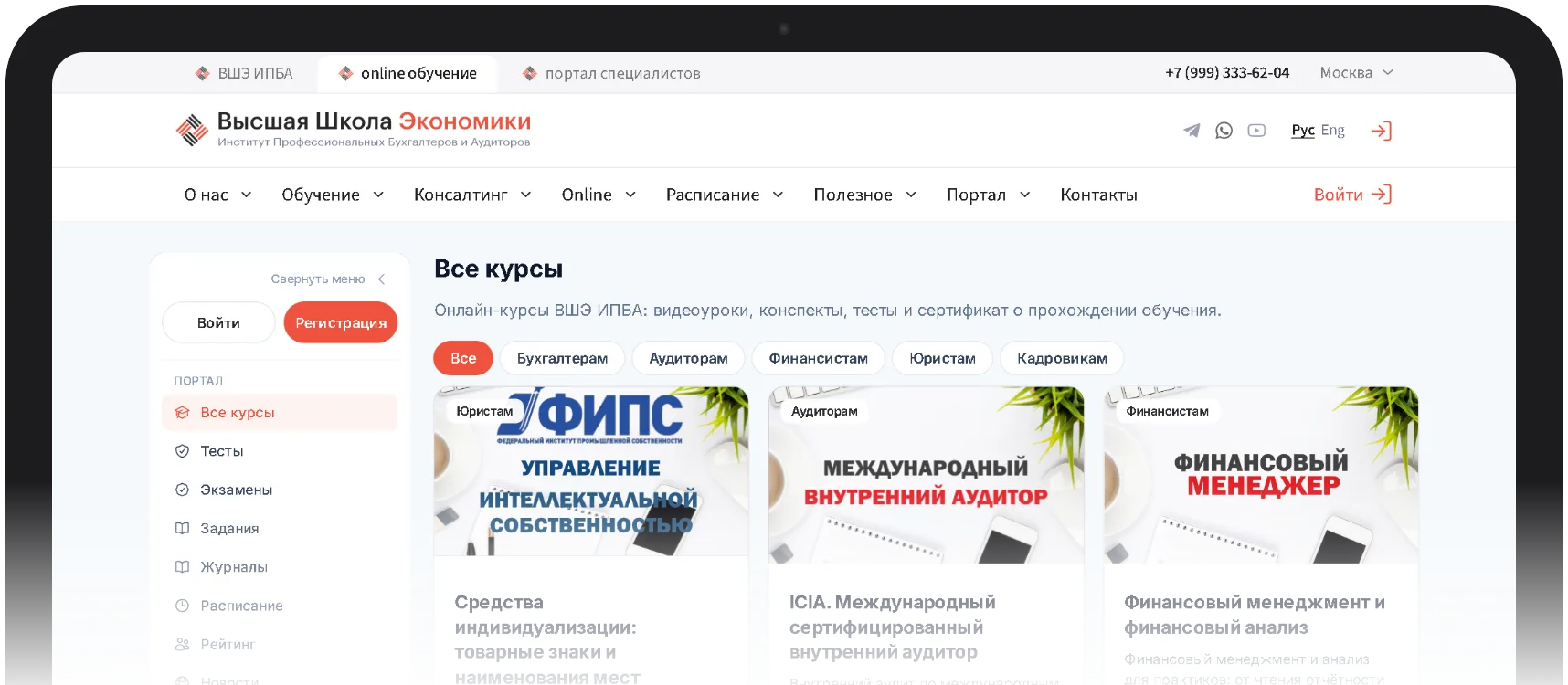
A convenient learning platform
A personal account with a clear interface: manage your training, track your progress and communicate with instructors in one place.
Training materials
All lectures, presentations and assignments in one place
Class schedule
A calendar with reminders of upcoming classes
Progress
Progress and completed assignments
Video lectures
Watch lectures at a convenient time
FAQ
Frequently asked questions about the course "Accounts Receivable Management"
Didn't find an answer? Ask a question — a manager will reply and help you choose a program.
Ask a question01 Who is the "Receivables Management" course suitable for?
The course is suitable for specialists who need to systematise their knowledge of “Receivables Management”, improve their qualifications and apply new skills in their work.
02 What does the course programme include?
The programme covers the key requirements, professional tools and practical aspects of the course topic — professional development for specialists in debt management and collection.
03 Are practical classes included?
Yes. Theory is reinforced with practical assignments, examples and professional situations so that learners can apply their knowledge at work.
04 What are the duration and format of the training?
Format of training: 3 programme blocks. Duration: Business games and group work.
05 What document is issued after the training?
After successful completion of the course, a Certificate of Course Completion is issued. The terms of the final assessment are communicated before classes begin.
About the “Managing accounts receivable” program
Professional development for specialists involved in accounts receivable management/debt collection.
Accounts receivable make up a substantial part of companies' assets. Debt that is not repaid on time can lead not only to the loss of the debt amount, but also to bankruptcy and loss of control, the curtailment of investment programmes, the need to borrow, a lower level of solvency, reduced asset liquidity and other adverse consequences.
In this connection, accounts receivable management should be an important component of every company's policy. The creditor's main task is to carry out the necessary measures that will minimise the possibility of overdue debt arising and, if debt does arise, to recover it as quickly as possible.
The seminar programme combines the methods of risk management, financial analysis, security services, legal services and sales department work in the context of working with accounts receivable, in order to build a general picture of how to handle them.
The solutions discussed at the seminar can be applied in practice to any receivable.
The seminar is aimed at managers and employees of organisations who work with accounts receivable and debt collection, and other interested persons (lawyers, accountants, buyers, contract specialists, collectors, enforcement officers, etc.).
Objectives:
Expanding general knowledge of accounts receivable management;
minimising the risks of overdue debt arising and the risks of debt non-repayment;
improving skills in working with debtors and overdue debt;
developing an algorithm for working with debtors.
Programme:
BLOCK 1. Introduction.
- Relevance of the topic
- Classification of accounts receivable.
- Causes of accounts receivable
- General issues of organising accounts receivable management (Credit policy)
BLOCK 2. Main part.
- Group discussion: The existing practice of working with debt at the enterprise (what problems there are, what to pay attention to, how to work with debtors).
- Preventing the formation of overdue debt.
- at the stage of concluding a contract (when drafting the contract and checking the status and documents of the counterparty).
- establishing the actual (financial) position/status of the counterparty
- Pre-trial work with overdue debt:
- communication with the debtor (negotiations with the debtor (face-to-face meetings and using technical means; correspondence): general tactics and characteristics of properly structured communication).
- Business game: Negotiations with the debtor.
- Independent work: Drafting claim letters and notices to the debtor,
- motivating the debtor to repay overdue debt (positive and negative methods of motivation, including informing counterparties and the public about debtors and their participants/shareholders).
Group discussion: Ways of motivating a debtor to repay debt.
- amendment and termination of the contract.
- debt restructuring (possibilities of applying civil-law methods of closing overdue debt).
- Group work: Methods of debt collection.
- The court stage of debt collection.
- alternatives to state court proceedings;
- court proceedings in debt collection, general issues.
- expedited consideration/resolution in court of cases related to debt collection (summary proceedings).
- securing the claim
- evidence and proof in court proceedings (types of evidence, burden of proof).
- Enforcement proceedings in debt collection.
State enforcement officers. Private enforcement officers (time limits and other procedural issues).
- Non-traditional methods of collection (collectors, tax authorities, initiating a criminal case, initiating bankruptcy).
- Property that cannot be foreclosed on.
- Succession to the debtor's rights, or who else can be pursued for the debt (legal entities, individuals; managers and owners of the organisation; subsidiary liability for the debtor's obligations).
- The role of measures securing proper performance of contractual obligations in debt collection (traditional and non-traditional measures).
- Cases where debt collection is impossible (termination of the obligation).
BLOCK 3. Conclusions
- Drawing up a summary (based on one's own experience of debt collection) on debt collection issues.
- Review and discussion of participants' questions.
Duration: 10-12 hours
Not sure which program to choose?
Our specialists will help you choose a program for your goals and answer all your questions. The consultation is free!
Reach us in one click: call us.
+7 (727) 224-21-21
contact us via messengers


